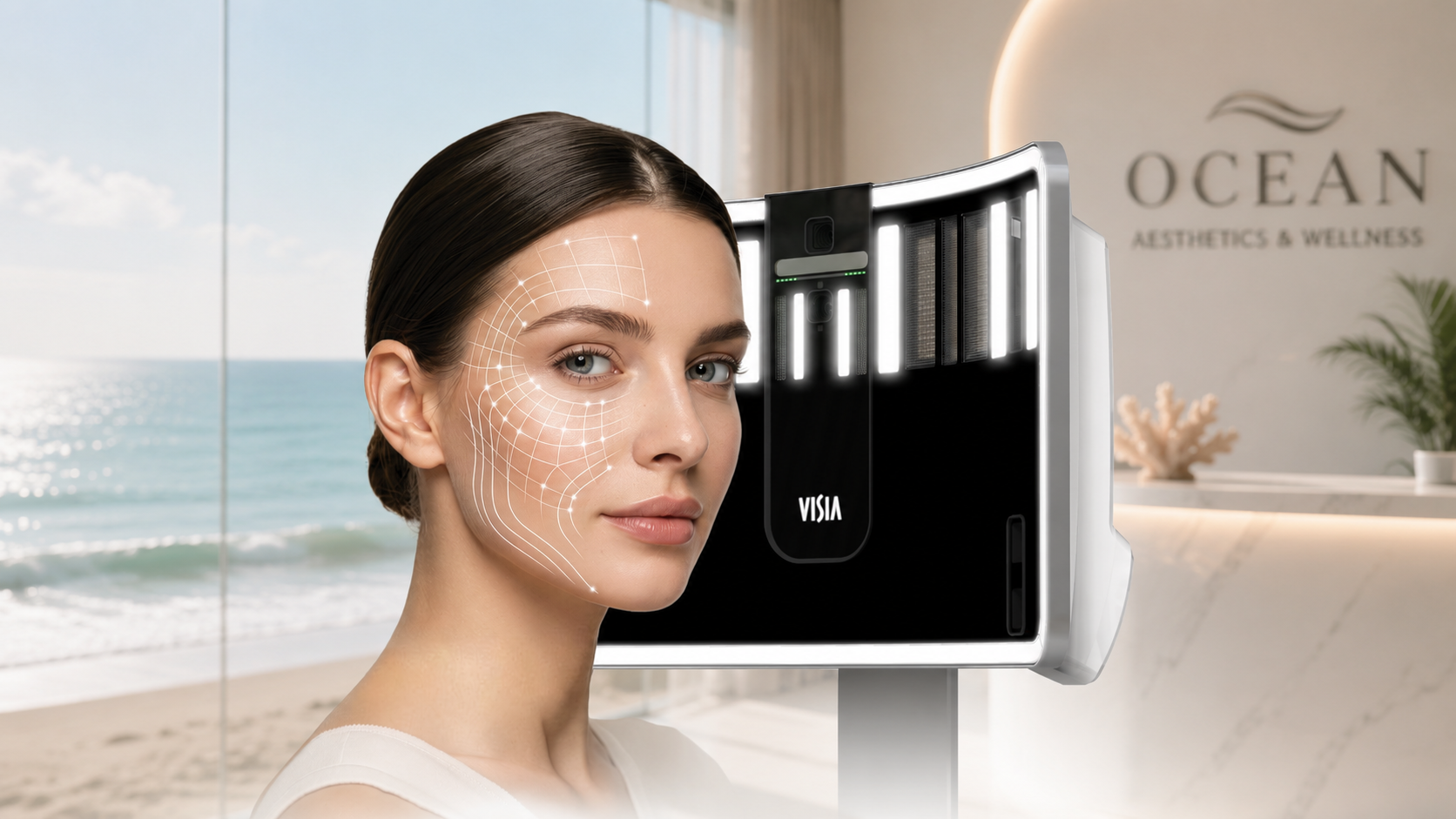
Your skin looks different in photos than in the mirror because cameras and mirrors capture light and depth in fundamentally different ways. A mirror reflects a real-time, three-dimensional image, while a camera compresses everything into a flat, two-dimensional plane — and that compression changes how texture, tone, and surface detail appear. Lighting, lens focal length, and camera sensors all amplify this effect. The questions below unpack exactly why this happens and what it means for your skin.
Why does a camera capture skin differently than a mirror does?
A camera captures skin differently than a mirror because it flattens a three-dimensional surface into a two-dimensional image. When light reflects off your face in a mirror, your brain interprets depth, shadow, and dimension naturally. A camera sensor cannot do this — it records a single flat plane, which causes surface details like pores, texture, and fine lines to appear more prominent than they do in person.
There is also a lens distortion factor. Most smartphone cameras use wide-angle lenses that subtly distort the face, particularly around the edges of the frame. This is not how your eye sees you. A mirror reflects light at a 1:1 ratio from a comfortable viewing distance, while a phone camera is often held much closer, which magnifies and warps facial features in ways that feel unfamiliar and unflattering.
Additionally, cameras freeze a single moment in time. When you look in a mirror, your face is animated — your expression shifts, your eyes move, your posture adjusts. A photo captures one fraction of a second, often catching an expression or angle that you would never consciously hold. This contributes significantly to the disconnect between how you see yourself and how you appear in photographs.
Why does skin texture look worse in photos than in real life?
Skin texture looks worse in photos because a camera’s two-dimensional image removes the visual context that makes texture appear normal in real life. In person, your brain processes light, shadow, and movement together, which softens how texture reads. In a photo, shadows cast by pores, fine lines, and uneven skin surface are captured in sharp, static detail — making texture appear more pronounced than it actually is.
Camera sensors are also designed to capture contrast. Pores, bumps, and surface irregularities create tiny shadows, and a camera picks up that contrast with precision. Your eye, by contrast, is constantly adjusting — compensating for shadow, smoothing out minor variations, and reading the face as a whole rather than as a collection of surface details.
Flash photography compounds this further. Direct flash flattens the face and creates harsh highlights that emphasize every raised or recessed surface feature. Natural, diffused light is far more forgiving because it wraps around contours rather than bouncing directly off them. This is why professional photographers and lighting designers work so carefully with light direction — the angle and quality of light have a dramatic effect on how skin texture reads in an image.
Why does acne look worse on camera?
Acne looks worse on camera for several overlapping reasons, and the answer differs depending on whether you are dealing with active breakouts, post-breakout marks, or indented scars.
Active breakouts have raised surfaces and surrounding redness. A camera’s contrast sensitivity picks up the shadow at the base of each blemish and the color variation in surrounding skin far more sharply than your eye does in a mirror. Flash makes this worse by bouncing directly off raised surfaces and deepening the shadows around them. Modern smartphones also apply automatic sharpening that increases the apparent definition of every surface irregularity, including breakouts.
Post-breakout marks — flat areas of redness or pigmentation — photograph more intensely than they appear in person because cameras register tonal contrast across the skin without the adaptive smoothing your visual system applies. Indented scars present a different problem: the small shadows that sit inside each depression are subtle in a mirror viewed at a normal distance, but a camera held close and lit from above turns those same shadows into clearly defined recesses. If you have wondered whether acne scars fade over time, understanding how cameras amplify their appearance is a useful starting point.
Why do wrinkles look worse in pictures?
Wrinkles look worse in pictures because three factors converge in a way they rarely do when you look in a mirror: a frozen expression, unfavorable light angle, and close lens distance.
When you look in a mirror, your face is in motion. Your expression shifts constantly, and your brain reads the face as a whole. A photo freezes one fraction of a second — often a moment when muscles are mid-movement — and the resulting dynamic lines appear as fixed, defined creases rather than the fleeting movements they are.
Overhead lighting, which is common in most indoor environments, casts downward shadows that settle directly into the folds around the eyes, mouth, and forehead, making lines appear deeper than they are. Finally, a smartphone held at arm’s length is still significantly closer to your face than the distance at which you view yourself in a mirror. That shorter distance subtly distorts facial proportions and brings surface detail — including fine lines — into sharper apparent focus. Together, these three factors consistently make wrinkles read as more prominent in photographs than they appear in daily life.
Does lighting actually change how your skin looks in photos?
Yes, lighting changes how your skin looks in photos significantly. The direction, quality, and color temperature of light all affect how skin texture, tone, and surface irregularities are captured. Harsh overhead or direct lighting casts sharp shadows that emphasize pores and fine lines. Soft, diffused light from the side or slightly above tends to minimize texture and even out skin tone in photographs.
Color temperature matters as well. Warm light (candlelight, golden-hour sunlight) tends to soften the appearance of redness and give skin a more even tone. Cool, blue-toned light — common in office environments and some indoor settings — can accentuate redness, uneven pigmentation, and shadows under the eyes.
In a mirror, you are usually viewing yourself under consistent ambient light that your brain has already adapted to. In a photo, the camera sensor captures that light exactly as it falls on your face in that moment, without the adaptive processing your visual system applies automatically. This is why the same face can look dramatically different across photos taken in different environments, even within the same day.
What skin concerns are most visible in photos but not in the mirror?
The skin concerns most visible in photos but not in the mirror are uneven pigmentation, fine surface texture, early sun damage, and mild redness. These concerns share a common characteristic: they involve subtle tonal or textural variation that the eye and brain naturally smooth over in a mirror but that a camera captures with clinical accuracy.
Pigmentation is particularly revealing in photographs. Brown spots, post-inflammatory hyperpigmentation, and UV damage that appear faint or unnoticeable in a mirror can appear clearly defined in a photo, especially under certain lighting conditions. This is partly because cameras capture a wider range of tonal contrast than the eye consciously registers when looking at a familiar face. Understanding what hidden sun damage looks like can help put what you see in photos into context.
Fine lines in the periorbital area (around the eyes) and across the forehead are also frequently more visible in photos. When you look in a mirror, you typically hold a neutral or slightly engaged expression. A camera freezes whatever expression was present at the moment of capture, including the subtle muscle movements that create dynamic lines. Redness and vascular patterns around the nose and cheeks follow the same principle — the camera captures them as fixed features rather than as the variable, movement-dependent patterns they are in real life.
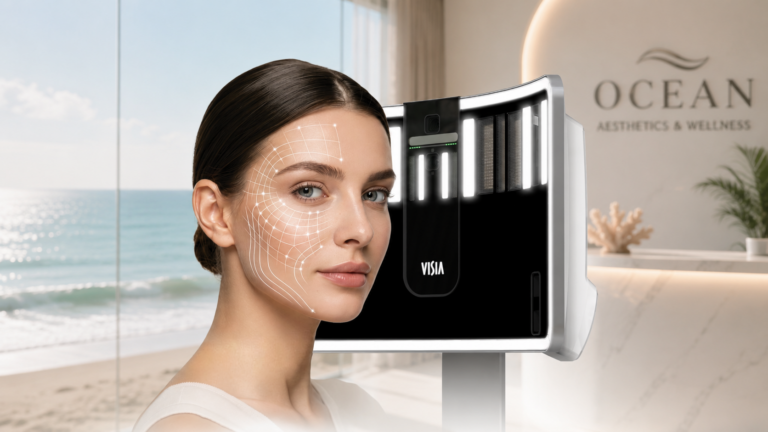
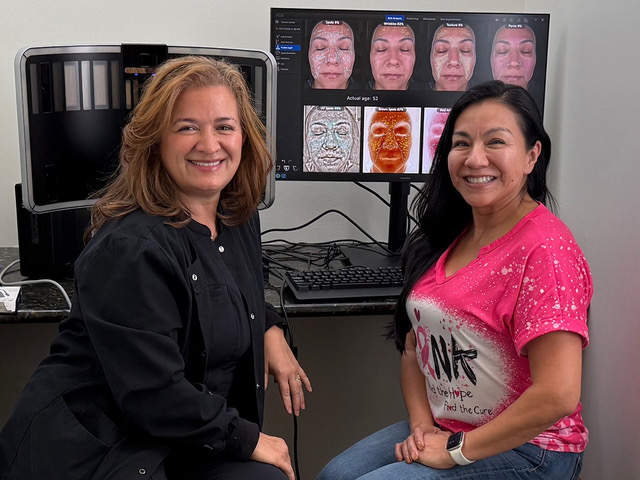
This is one reason why AI-powered skin analysis tools like VISIA Skin Analysis are valuable in aesthetic consultations. VISIA images visible features such as spots, texture, pores, UV-related features, and redness that are hard to judge accurately in a mirror — giving a clearer picture of what is actually present on the skin.
When it’s not just the camera
If the same concerns appear consistently across photos taken in different lighting and at different distances, the camera is not creating them — it is simply revealing them. A complimentary VISIA skin analysis, included in a 20-minute consultation, shows exactly what is present on your skin: spots, texture, pores, UV-related features, and redness mapped with objective detail rather than guesswork. That information makes it far easier to decide what, if anything, is worth addressing.
Can skin treatments improve how your skin looks in photos?
Yes, improving actual skin quality — texture, tone, pigmentation, and surface smoothness — will improve how your skin appears in photos. Because cameras amplify surface irregularities and tonal variation, treatments that reduce these concerns at a structural level produce results that are clearly visible both in person and on camera. Smoother skin reflects light more evenly, which photographs more favorably under any lighting condition.
Treatments that address pigmentation and surface texture tend to produce the most noticeable photographic improvement. Laser skin resurfacing, for example, targets uneven tone, sun damage, and surface irregularities directly. RF microneedling for texture and acne scars can reduce the fine surface detail and mild irregularities that photographs tend to emphasize. Exploring curated signature skin rejuvenation pathways can also help match the right combination of treatments to your specific skin concerns.
It is worth noting that improving how your skin looks in photos is not the goal in itself — it is a natural outcome of improving actual skin health. When skin is genuinely healthier, with more even pigmentation and a smoother surface, those improvements show up in every context: in the mirror, in photographs, and in how your skin feels. If you are unsure where to start, schedule a complimentary skin analysis at our Hilton Head Island practice for an objective assessment that identifies which concerns are most relevant to your skin and which approaches are best matched to address them.