Hidden sun damage looks like subsurface pigmentation, weakened collagen, and compromised skin structure that has not yet surfaced as visible spots or wrinkles. UV radiation begins altering skin at a cellular level long before any outward signs appear, which is why many people underestimate how much cumulative damage has already occurred. The questions below unpack what is happening beneath the skin, how to detect it, and what can be done about it.
How does UV radiation damage skin below the surface?
UV radiation damages skin below the surface by penetrating into the dermis, where it breaks down collagen and elastin fibers, disrupts melanin production, and triggers chronic low-grade inflammation. This structural damage accumulates with every unprotected sun exposure, often years before it becomes visible on the skin’s surface. The process is gradual, cumulative, and largely invisible in its early stages.
There are two types of UV radiation relevant here. UVB rays primarily affect the outermost layer of skin and are responsible for sunburn. UVA rays, however, penetrate much deeper into the dermis and are the primary driver of subcutaneous sun damage. UVA exposure degrades collagen and elastin, the structural proteins that keep skin firm, smooth, and resilient. Over time, this degradation leads to the thinning, sagging, and textural changes associated with photoaging.
At a cellular level, UV radiation also damages DNA in skin cells and triggers the overproduction of melanin in irregular patterns. This melanin accumulation begins deep in the skin and only migrates to the surface gradually, which is why pigmentation spots often seem to appear suddenly in midlife despite being years in the making. The inflammatory response triggered by repeated UV exposure further accelerates collagen breakdown, creating a cycle of damage that compounds over time.
What are the signs of hidden sun damage under the skin?
The signs of hidden sun damage under the skin include subsurface pigmentation deposits, early collagen loss, irregular melanin clustering, and vascular changes that have not yet become visible to the naked eye. These changes are present and measurable before they manifest as dark spots, fine lines, or visible redness. In a sun-rich environment like Hilton Head, subcutaneous UV damage is often far more extensive than surface appearance suggests.
Subsurface pigmentation is one of the most common and underrecognized forms of hidden sun damage. Melanin produced in response to UV exposure can accumulate in deeper skin layers and remain invisible on the surface for years. When this pigmentation eventually rises to the surface, it presents as age spots, uneven tone, or patches of hyperpigmentation that seem to appear without warning.
Collagen and elastin degradation is another key marker of sun damage under the skin. Before the skin visibly sags or wrinkles, the structural matrix that supports it is already weakening. This manifests subtly as a gradual loss of firmness, a slight change in skin texture, or a reduced ability for the skin to bounce back after compression. These are early indicators that photoaging is underway beneath the surface.
Vascular changes, including the early formation of dilated capillaries and inflammatory patterns, are also associated with cumulative UV exposure. These may not be visible as redness or broken capillaries yet, but they represent a measurable shift in skin health that can be detected with the right imaging tools.
How can you detect sun damage that isn’t visible yet?
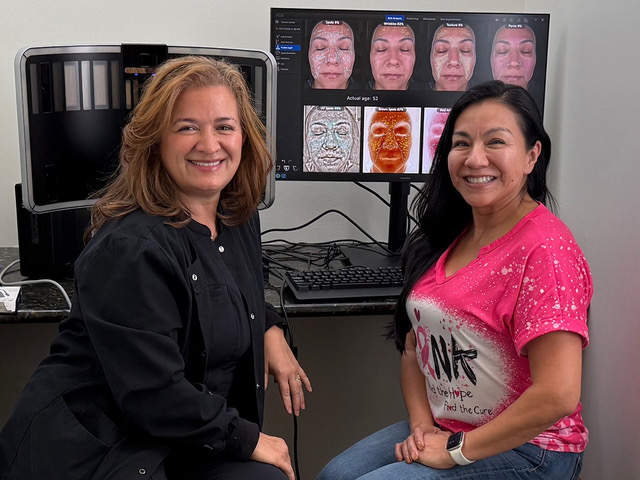
Sun damage that is not yet visible can be detected using multi-spectral imaging technology, which captures skin at different light wavelengths to reveal subsurface pigmentation, UV spots, and vascular changes invisible to the naked eye. This type of clinical imaging goes beyond what any mirror or standard consultation can show, providing an objective picture of the skin’s actual condition beneath the surface.
At Ocean Aesthetics & Wellness, this is done through a VISIA skin analysis, powered by the VISIA® complexion analysis system. VISIA uses multi-spectral imaging to evaluate the skin simultaneously at multiple wavelengths, revealing UV spots, subsurface pigmentation clusters, redness patterns, texture irregularities, and pore detail that standard visual assessment cannot identify. The system then benchmarks your results against age-matched norms, giving you an objective measure of where your skin stands relative to its peers.
For patients living in coastal, high-sun environments, this kind of assessment is particularly revealing. Many patients who feel their skin looks reasonably healthy discover significant subsurface UV damage that has been accumulating silently for years. Detecting it early, before it surfaces, creates a meaningful window for intervention. A standard consultation with a mirror simply cannot provide that level of insight.
What treatments address sun damage beneath the skin’s surface?
Treatments that address sun damage beneath the skin’s surface work by stimulating collagen production, targeting subsurface pigmentation, and repairing the structural changes UV radiation has caused in the dermis. The right approach depends on the type and depth of damage present, which is why accurate skin assessment should precede any treatment recommendation. For a broader overview of recovery options, see how to heal sun-damaged skin for a coordinated treatment framework tailored to individual skin needs.
Laser Skin Resurfacing for Pigmentation and Surface Damage
Laser skin resurfacing targets both surface and subsurface pigmentation by delivering controlled energy that breaks up melanin deposits and stimulates the skin’s natural repair process. At Ocean Aesthetics & Wellness, Waterlase laser skin resurfacing addresses pigmentation, uneven texture, and sun-related surface changes with precision. As the skin heals, it produces new collagen and clears accumulated pigment, improving both tone and texture over a series of treatments.
RF and Ultrasound Treatments for Collagen Rebuilding
For the deeper structural damage caused by UV radiation, radiofrequency and ultrasound-based treatments work beneath the skin’s surface to stimulate collagen and elastin production. EXION Clear RF, available at Ocean Aesthetics & Wellness, delivers RF energy and ultrasound to the dermis, targeting the collagen loss and skin laxity that subcutaneous sun damage accelerates. These treatments do not address surface pigmentation directly, but they rebuild the structural foundation that UV exposure has compromised over time.
The most effective treatment plans for hidden sun damage typically address multiple layers. Surface pigmentation and texture may respond well to laser resurfacing, while deeper collagen loss and laxity may require RF-based treatment to rebuild structural support. A thorough skin assessment is the appropriate starting point for determining which combination is right for any individual.
Can hidden sun damage get worse over time if left untreated?
Yes, hidden sun damage can and does worsen over time if left untreated. Subsurface UV damage does not resolve on its own. Without intervention, collagen continues to break down, pigmentation deposits migrate toward the surface, and the cumulative effects of continued UV exposure compound the existing damage. The longer subcutaneous sun damage goes unaddressed, the more extensive its eventual surface presentation tends to be.
Collagen loss is particularly significant in this context. Once UV radiation has degraded collagen and elastin fibers in the dermis, the skin’s ability to repair that structural damage naturally diminishes with age. Ongoing sun exposure without adequate protection accelerates this process, meaning that hidden damage from years past is being layered with new damage each season. The result is skin that ages more rapidly than its chronological age would suggest.
Pigmentation that remains subsurface will eventually rise. The timeline varies depending on skin type, continued UV exposure, and hormonal factors, but the trajectory is consistent. What appears as a small cluster of subsurface melanin today may surface as a prominent dark spot or patch of hyperpigmentation within a few years. Addressing it while it remains beneath the surface is clinically easier and typically requires less aggressive treatment than correcting visible pigmentation after the fact.
There is also a risk dimension beyond aesthetics. Chronic UV damage at a cellular level has implications for skin health that extend beyond cosmetic concerns. While this article is not intended to address medical diagnosis, anyone with a history of significant sun exposure and visible or suspected skin changes should consult with a qualified clinician for a thorough evaluation.
If you are concerned about what UV exposure may have done to your skin beneath the surface, the most useful first step is an objective assessment. Book a complimentary skin analysis at Ocean Aesthetics & Wellness on Hilton Head Island — a no-obligation, approximately 20-minute consultation that includes VISIA imaging so you can see exactly where your skin stands before committing to any treatment.