During a skin consultation at a medical spa, a trained provider evaluates your current skin health, discusses your concerns and goals, and uses that information to recommend treatments matched to your specific needs. Unlike a standard facial, a medical spa consultation is a clinical assessment — not a service in itself. The sections below answer the most common questions patients have before their first med spa skin consultation.
What do medical providers assess during a skin consultation?
During a skin consultation at a medical spa, providers assess skin quality, texture, tone, pigmentation, signs of aging, vascular concerns, and overall skin health. The goal is to build an accurate clinical picture of where your skin is today — not just what you can see in a mirror, but what is developing beneath the surface.
A thorough skin assessment typically covers several interconnected areas. Providers look at surface-level concerns such as pore size, uneven texture, and tone inconsistencies. They also evaluate deeper structural changes, including skin laxity and the early stages of volume reduction that contribute to a hollowed or aged appearance over time.
Pigmentation and sun damage are frequently among the most significant findings, particularly for patients in sun-intensive environments. UV damage can be present well before it becomes visible to the naked eye, which is why many advanced practices use imaging technology to capture what a visual exam alone cannot.
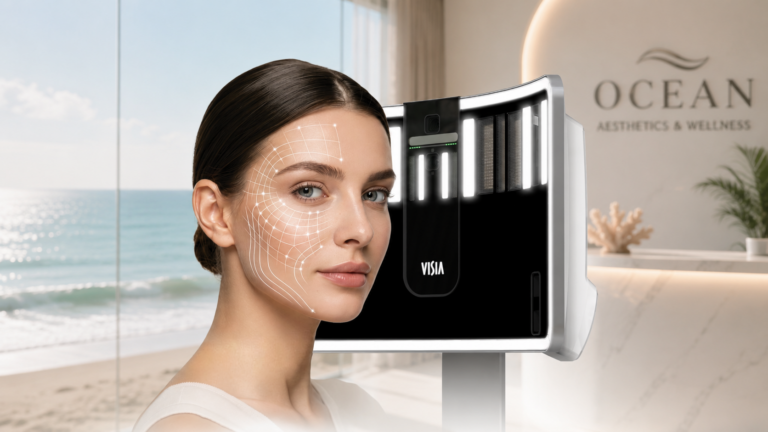
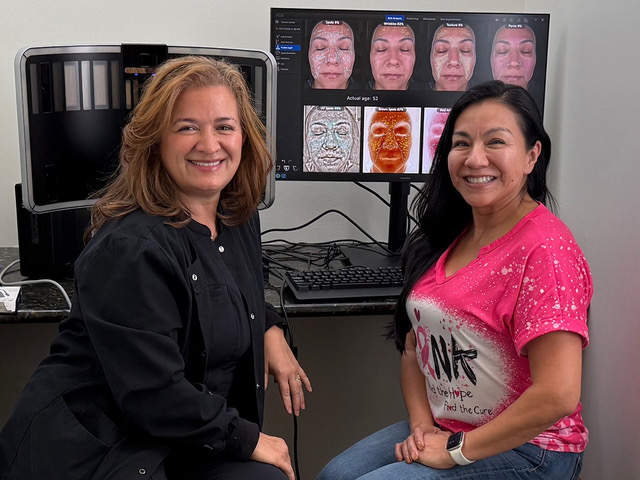
At Ocean Aesthetics & Wellness, every complimentary consultation — approximately 20 minutes — includes a VISIA skin analysis, an advanced facial imaging system that evaluates skin across multiple dimensions simultaneously, including redness, subsurface pigmentation, pore visibility, and surface texture. This gives both the provider and the patient a clear, objective starting point for the conversation. Most consultations are conducted by Elizabeth Kirby, RDH and Licensed Esthetician; Dr. Elizabeth Gerhart-Sugg, DDS, conducts consultations on occasion as well.
What questions should you expect a provider to ask?
At a med spa consultation, providers typically ask about your primary skin concerns, your skincare routine, your medical history, your lifestyle, and your treatment goals. These questions are not routine formalities — they directly shape the clinical recommendations that follow.
Expect questions that cover the following areas:
- Your main concerns: What bothers you most about your skin right now — texture, tone, fine lines, pigmentation, or something else?
- Your skin history: How long have you noticed these concerns? Have they changed over time?
- Previous treatments: Have you had any aesthetic treatments before, including injectables, laser, or facials? What were the results?
- Your current skincare routine: What products do you use daily, and how consistent are you?
- Sun exposure habits: Do you use SPF regularly? How much time do you spend outdoors?
- Medical history and medications: Certain conditions and medications affect skin behavior and treatment eligibility.
- Your goals: Are you looking for maintenance, targeted correction, or a more comprehensive rejuvenation approach?
The more honestly you answer these questions, the more accurate and useful your treatment recommendations will be. A good provider will use your answers to contextualize what the skin assessment reveals — because the same finding can have different causes and different solutions depending on your history and habits.
How does a medical spa create a personalized treatment plan?
A medical spa creates a personalized treatment plan by combining the findings from your skin assessment with your stated goals, medical history, lifestyle, and budget. The plan identifies which concerns to address, which treatments are appropriate for your skin type and condition, and in what sequence treatments should be delivered for the best results.
Personalization at a clinical level means more than choosing between two or three options. A well-constructed treatment plan considers which layers of the skin are involved — surface, mid-layer, or structural — and selects treatments that address each layer appropriately. Treating surface pigmentation with a tool designed for deep tissue remodeling, for example, would not produce the right outcome. Sequencing matters as well: some treatments prepare the skin for what follows, and delivering them out of order can reduce effectiveness. If you are unsure where to begin, reviewing how to choose the right treatment can help you arrive at your consultation with a clearer sense of your priorities.
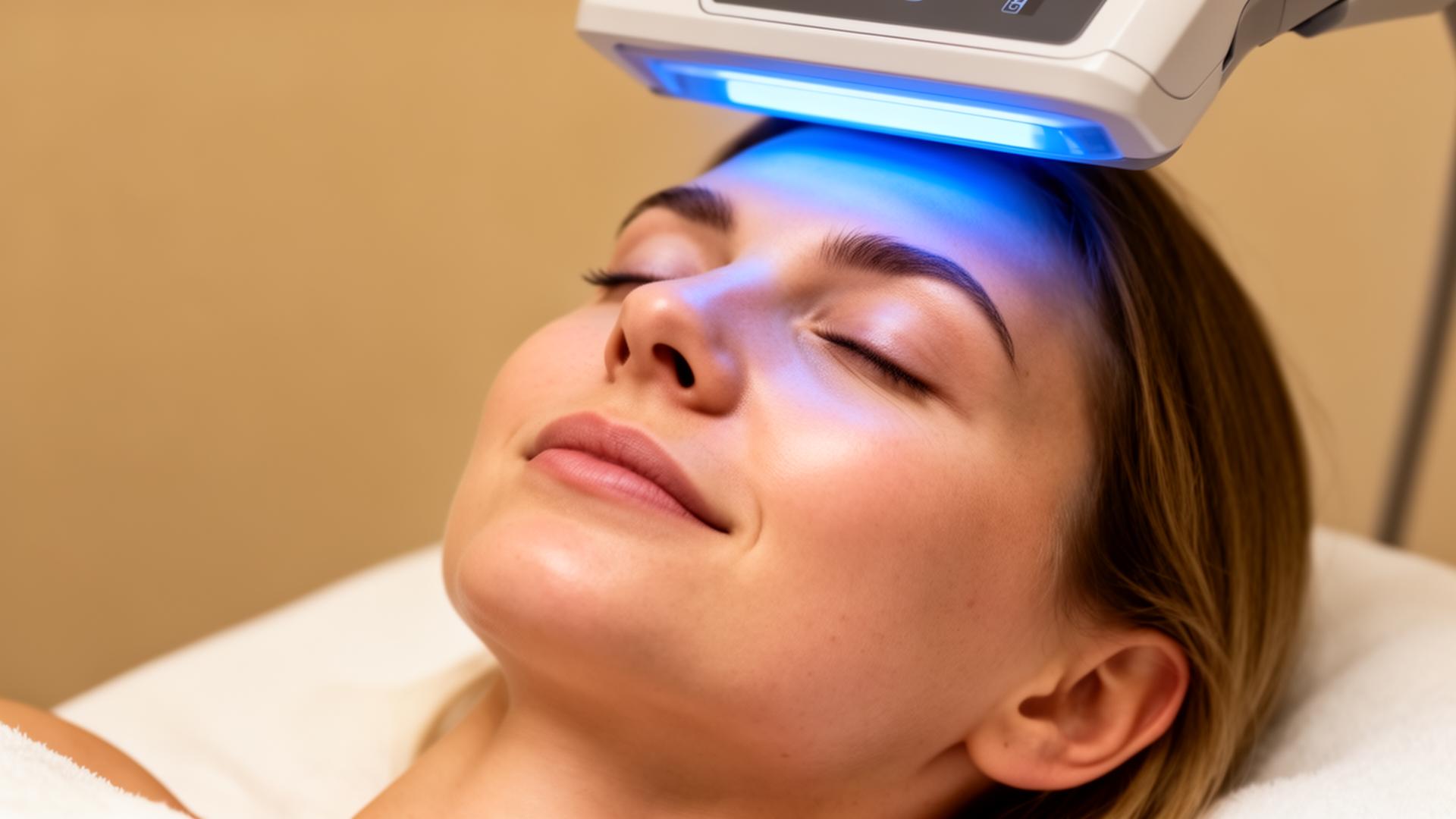
At Ocean Aesthetics & Wellness, assessment findings directly inform which treatments are recommended and how they are structured. Patients with concerns across multiple layers of facial aging may be guided toward a Signature Rejuvenation Pathway — a tiered, multi-treatment program that sequences EMFACE, EXION, and laser skin resurfacing in a structured plan designed for comprehensive results. Patients with a single primary concern may be directed toward one targeted treatment. The plan follows the assessment findings, not a preset menu. A follow-up VISIA is typically completed after an agreed treatment, once the effects have had time to develop, so that progress can be reviewed objectively.
What’s the difference between a medical spa consultation and a regular facial consultation?
The key difference between a medical spa consultation and a regular facial consultation is clinical depth. A medical spa consultation is a structured assessment conducted by a trained provider, focused on understanding your skin health and building a treatment plan. A regular facial consultation is typically a brief intake conversation before a cosmetic service, with no formal skin analysis or structured recommendations.
In a standard spa or salon setting, a consultation is usually a short conversation about your skin type and any sensitivities — enough to customize the facial you are about to receive. The provider is not evaluating your skin for structural concerns, and no formal treatment plan is produced.
A medical spa consultation operates differently in several important ways:
- It is conducted by a trained, licensed provider with specialized aesthetic expertise
- It may involve advanced skin analysis tools such as VISIA imaging
- It evaluates skin health at a clinical level, not just surface appearance
- It produces formal treatment recommendations based on objective findings
- It accounts for medical history, contraindications, and treatment eligibility
This distinction matters because the quality of your outcomes depends heavily on the quality of the assessment that precedes treatment. Treatments recommended without a thorough skin evaluation are, at best, an educated guess. A proper med spa consultation replaces that guesswork with informed clinical reasoning.
What should you bring or do before your skin consultation?
Before your skin consultation at a medical spa, arrive with clean skin free of heavy makeup, bring a list of your current medications and supplements, and be prepared to describe your skincare routine and primary concerns in detail. Preparation helps your provider conduct a more accurate assessment and make better-informed recommendations.
A few specific steps to take before your appointment:
- Remove heavy makeup before arriving — or plan to arrive without it. VISIA imaging and clinical skin assessment are most accurate on bare skin.
- List your current medications and supplements. Some medications affect skin sensitivity, healing, and treatment eligibility. This information is clinically relevant, not just administrative.
- Write down your skincare products. Knowing what you apply daily — including active ingredients like retinoids, acids, or vitamin C — helps your provider understand your baseline and identify any interactions with planned treatments.
- Note your skin concerns in your own words. You do not need clinical language. Describing what you see, when it started, and what bothers you most is enough to give your provider a useful starting point.
- Think about your goals. Are you looking to address a specific concern, maintain your current skin health, or explore a more comprehensive approach to rejuvenation? Having a sense of this before you arrive makes the conversation more productive.
If you have had previous aesthetic treatments — including injectables or laser procedures at another practice — note those as well. Your treatment history is part of your overall picture, and a thorough provider will want to understand it before making recommendations.
If you are pregnant, nursing, or managing an active medical condition, let the practice know before your appointment. Some treatments have contraindications that need to be discussed with your provider in advance.
A skin consultation is the right place to start — whether you have a specific treatment in mind or simply want to understand what your skin needs. Learn more about the complimentary skin analysis in Hilton Head offered at Ocean Aesthetics & Wellness, or schedule your courtesy consultation to begin with a VISIA skin analysis and a clear, honest conversation about what is possible for your skin.