Fine lines, pigmentation, redness, uneven texture, and loss of firmness can look similar on the surface — but they often have very different underlying causes. Advanced skin analysis can help reveal what is actually happening beneath the surface, so treatment decisions can be based on your skin rather than guesswork.
Common Skin Concerns That Are Hard to Self-Diagnose
- UV and sun damage beneath the surface
- Pigmentation and brown spots
- Redness and vascular patterns
- Fine lines and wrinkles
- Skin texture and pores
- Loss of firmness and early collagen changes
Discover What Your Skin Analysis Can Reveal →
What Can Advanced Skin Analysis Reveal?
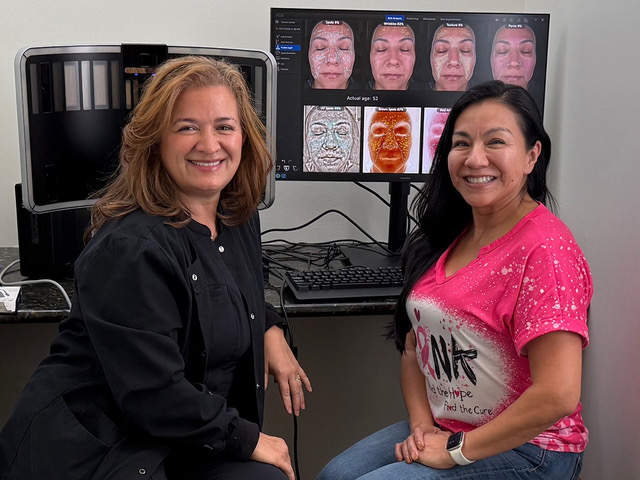
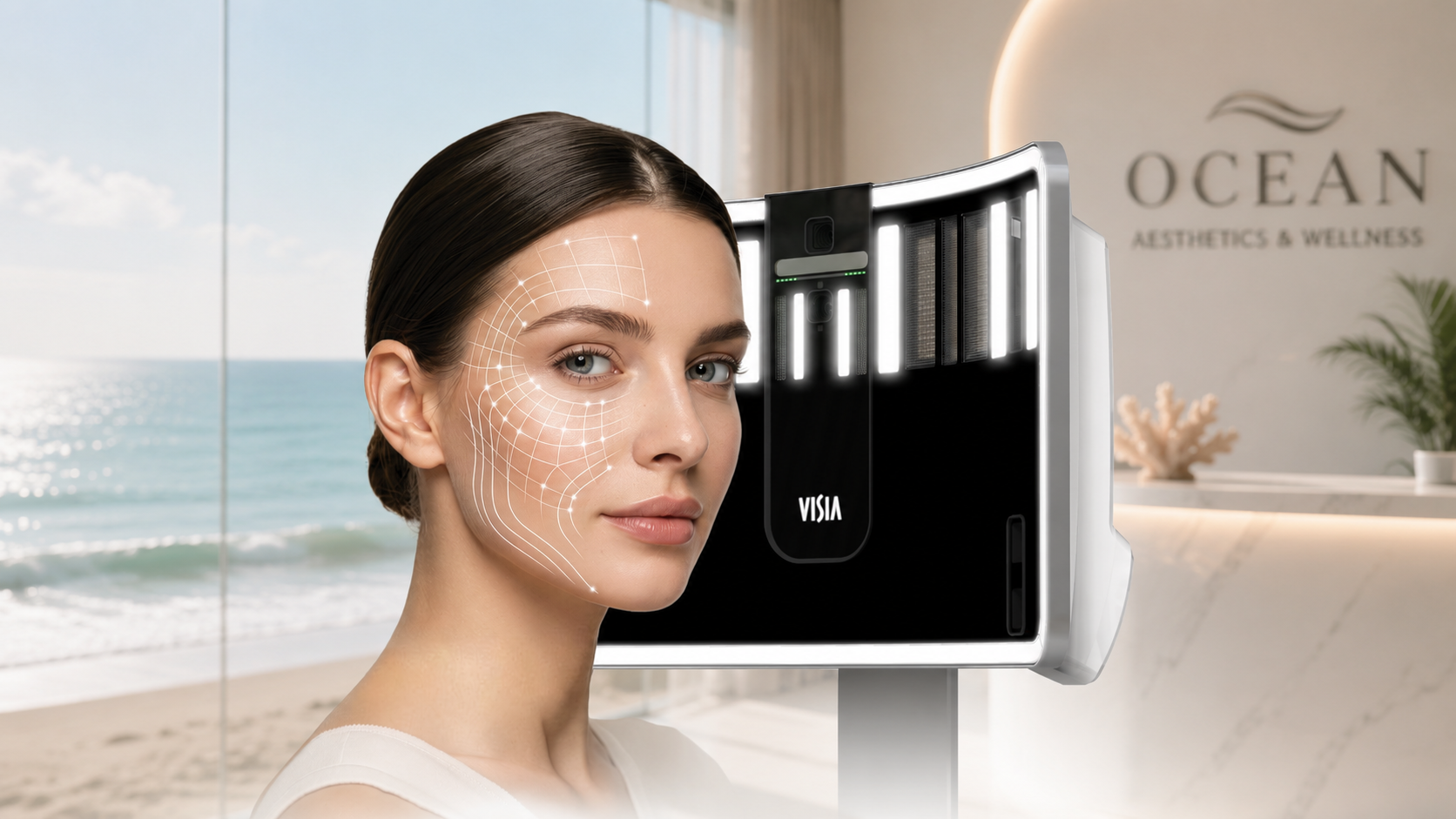
Our VISIA skin analysis system captures multi-spectral images that help evaluate measurable skin characteristics including:
- UV and sun damage
- Pigmentation and brown spots
- Redness and vascular patterns
- Fine lines and wrinkles
- Skin texture
- Pores
Advanced skin analysis provides objective information about these visible characteristics — it does not medically diagnose skin conditions or determine treatment on its own. The findings help guide professional assessment and support more informed conversations about your skin and your goals.
What types of skin problems are hardest to diagnose on your own?
The skin concerns that are hardest to self-diagnose are those that have multiple possible causes, develop gradually, or mimic other conditions. Persistent redness could reflect vascular changes or chronic surface-level concerns. Uneven pigmentation might reflect UV damage, hormonal shifts, or post-inflammatory changes.
Without objective data, it is genuinely difficult to tell them apart, and addressing the wrong cause rarely produces lasting improvement.
Subsurface UV damage is a particularly common example. Patients in sun-rich environments often have significant photodamage developing beneath the skin’s surface that is not yet visible as dark spots or texture changes. By the time it becomes apparent, the damage has been accumulating for years. Standard observation — whether in a mirror at home or a brief clinical glance — simply cannot detect what is happening at that level.
Skin laxity and early collagen changes present a similar challenge. These structural changes develop slowly, and because the shift is gradual, most people attribute what they see to tiredness or lighting rather than recognizing it as a measurable change in the skin’s underlying architecture. Imaging can surface visible indicators of these changes, though pinpointing every contributing factor may still require a fuller clinical conversation.
The same applies to vascular patterns and diffuse redness, which can look like a flush one day and a persistent concern the next, making it easy to dismiss until it becomes more pronounced.
How does a professional skin consultation identify the root cause?
A professional skin consultation identifies root causes by combining clinical assessment with objective skin analysis tools that go beyond what is visible on the surface. Rather than relying solely on what a patient reports or what a clinician observes in the room, advanced consultations use imaging technology to evaluate multiple skin characteristics simultaneously, producing data-supported findings that help guide more accurate conversations about care.
At Ocean Aesthetics & Wellness, the complimentary consultation — typically around 20 minutes and conducted by Elizabeth Kirby, RDH and Licensed Esthetician — begins with a VISIA skin analysis. The system captures multi-spectral images that help evaluate surface features, subsurface pigmentation, UV damage, vascular patterns, and other measurable skin characteristics in a single session. Each finding is compared against age-matched norms, giving the clinician objective information rather than a subjective impression. To learn more about what happens during a skin consultation, we have a dedicated overview that walks through the process.
What this means practically is that the consultation starts with data, not assumptions. A patient who comes in concerned about dullness might discover through imaging that the primary driver is subsurface UV damage rather than a surface texture issue. That distinction shapes which options are worth discussing and in what order. A conversation and a mirror cannot reliably surface that level of specificity — though imaging alone does not always tell the complete story either, which is why the clinical discussion that follows matters.
What’s the difference between treating symptoms and treating the cause?
Treating symptoms means addressing what you can see on the surface without identifying what is driving it. Treating the cause means understanding the underlying mechanism and targeting that directly. The difference in outcomes can be significant. Symptom-focused treatment often produces temporary improvement followed by recurrence, because the condition driving the visible concern has not changed.
A straightforward example is persistent redness. A topical product that reduces surface flushing may provide short-term relief, but if the underlying cause is vascular irregularity or a chronic surface-level concern, the redness returns once the product is discontinued. Addressing the cause requires identifying the vascular pattern, understanding its severity and distribution, and selecting an approach that targets the source rather than masking the result.
The same principle applies to pigmentation concerns. Brightening serums can lighten existing spots at the surface, but they do not address the UV damage or melanin activity driving new pigmentation. Without addressing the cause, new spots continue to form. This is why skin analysis that helps evaluate subsurface UV damage before it becomes visible is genuinely useful — it allows care to begin at the source, not in response to the outcome.
Cause-focused care also tends to be more efficient. Patients who understand what is actually happening in their skin can make better decisions about where to invest their time and resources, rather than cycling through products that address the wrong layer of the problem. For more on choosing the right aesthetic treatment for your concerns, our related article covers key considerations worth reviewing before committing to any approach.
Which treatments actually address the underlying cause of skin issues?
Treatments that address underlying causes work beneath the surface to stimulate structural change, rather than simply altering what is visible temporarily. The most clinically meaningful options for non-invasive skin concerns include energy-based and radiofrequency treatments that stimulate collagen production, laser-based treatments that address UV damage and pigmentation at the source, and electromagnetic treatments that target the facial muscles and dermis directly.
For skin quality concerns driven by collagen changes, EXION RF treatments work beneath the surface using radiofrequency energy to stimulate the skin’s own collagen-producing processes. This addresses the structural cause of texture changes, laxity, and fine lines rather than temporarily filling or smoothing them. For pigmentation and sun damage, laser skin resurfacing with the ReNew Waterlase targets the skin at the level where damage has accumulated, rather than bleaching the surface.
For patients for whom facial muscle tone and structural lift are the primary concern, EMFACE uses synchronized radiofrequency and HIFES electromagnetic energy to address both the dermis and the underlying facial muscles simultaneously. This targets the structural layer of facial aging rather than its surface expression.
What distinguishes these approaches from symptom-focused treatments is that the mechanism of action is directed at the cause identified through assessment. That is why skin analysis and a thorough consultation matter before any treatment begins. Without knowing what is driving a concern, even clinically effective treatments may be applied to the wrong layer or the wrong problem — and no imaging system alone can make that determination.
When should you see a professional instead of trying products first?
You should see a professional when a skin concern has persisted despite consistent product use, when you are unsure what is causing the problem, or when the concern involves structural changes to the skin that topical products cannot reach. Products work at the surface. Many of the most common skin concerns — including collagen changes, vascular irregularity, subsurface UV damage, and muscle-related changes — develop in layers that topical skincare is not designed to address.
There are also situations where trying products first can delay more effective care. Pigmentation driven by ongoing UV damage will continue to develop regardless of brightening products applied at the surface. Redness with a vascular component will not respond meaningfully to calming serums. In these cases, time spent on products is time the underlying condition continues to progress.
A professional consultation is particularly valuable when you are considering more significant options and want to make an informed decision. Understanding what your skin actually needs — based on objective information rather than self-diagnosis — ensures that any investment you make is directed at the right concern. It also establishes a baseline that allows progress to be tracked meaningfully over time, which is something no product trial can provide. You do not need to arrive with a treatment in mind; the consultation is designed to help you figure that out.
Not Sure What Your Skin Actually Needs?
Start by understanding what your skin is showing. A complimentary consultation at Ocean Aesthetics & Wellness on Hilton Head Island includes a VISIA skin analysis and a review of the findings with Elizabeth Kirby, our Licensed Esthetician. Together, you can discuss what the imaging shows and explore options that are appropriate for your concerns and goals — with no obligation to commit to a treatment before you are ready.