Noticing looser or thinner-looking skin, fine lines that remain when your face is at rest, or less definition around your cheeks and jawline? These can be signs of declining facial collagen and structural support.
Common Signs of Collagen Loss
- Fine lines that remain at rest
- Crepey or thinning-looking skin
- Less firmness and elasticity
- Deepening folds
- Under-eye hollowing
- Reduced cheek fullness
- Softer jawline definition
Not Sure Whether What You’re Seeing Is Collagen Loss?
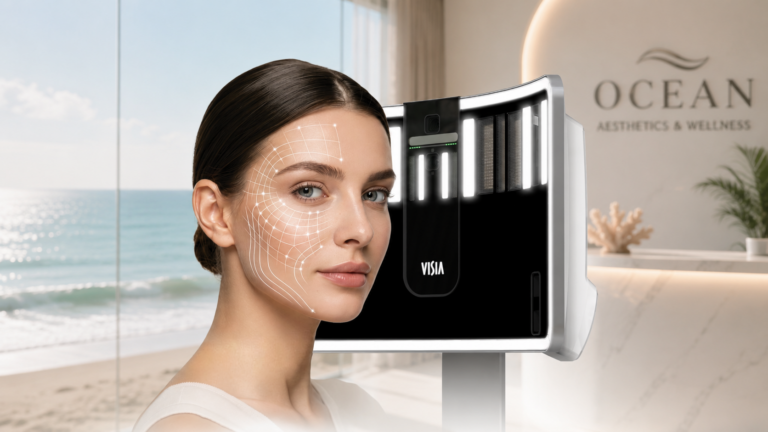
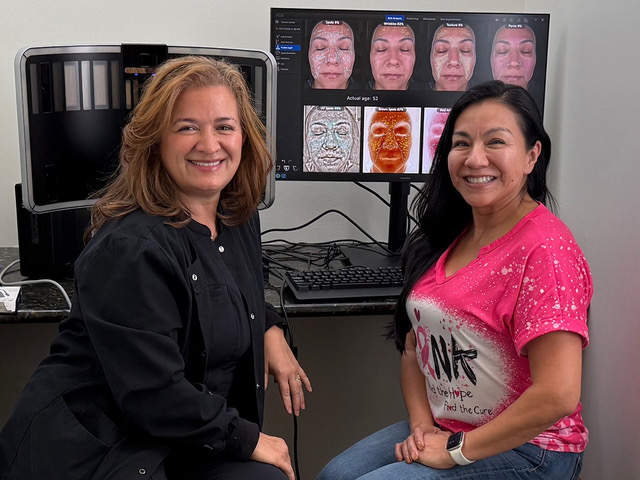
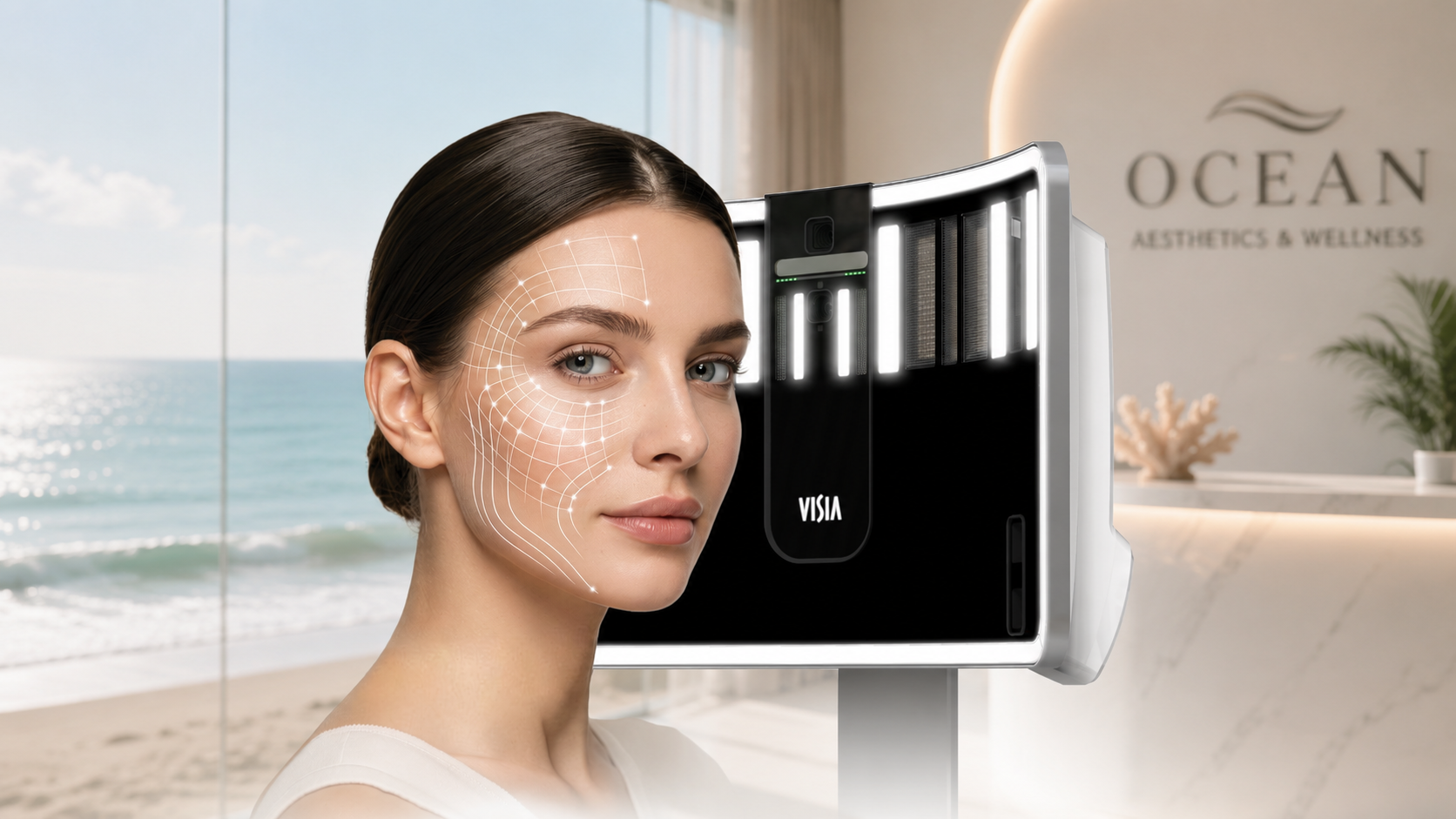
Looking in the mirror can tell you what your skin looks like, but not necessarily what is contributing to the changes. Advanced skin analysis can provide objective information about measurable skin characteristics and help guide a more personalized assessment.
Learn About VISIA Skin Analysis
What are the first signs of collagen loss in your face?
The first signs of collagen loss in the face are subtle changes in skin texture and firmness that often appear before visible wrinkles develop. Skin may begin to feel less resilient when pressed, fine lines may linger at rest rather than only appearing with expression, and the overall surface of the skin can look slightly duller or less plump than before.
One of the earliest and most telling signs is a change in how the skin around the eyes, mouth, and cheeks behaves. Skin that once snapped back quickly after being stretched or compressed may begin to respond more slowly. This loss of elasticity is directly tied to declining collagen density in the deeper layers of the skin.
Other early collagen loss symptoms include:
- Crepey skin texture — a fine, papery quality that appears most often around the eyes, neck, and upper cheeks
- Deepening of nasolabial folds — the lines that run from the nose to the corners of the mouth become more defined even at rest
- Hollowing beneath the eyes — as structural support diminishes, the under-eye area can appear sunken or shadowed
- A subtle loss of jawline definition — the lower face begins to look softer or less structured than it previously did
These signs are often dismissed as normal tiredness or stress, which is why they tend to go unaddressed until the changes become more pronounced. Recognizing them early creates more options for intervention.
Why does facial collagen break down over time?
Facial collagen breaks down over time primarily because the body’s natural collagen production slows with age, while existing collagen fibers are simultaneously degraded by environmental and biological factors. After the mid-twenties, collagen synthesis decreases gradually each year, and the structural network that gives skin its firmness and volume becomes progressively thinner and less organized.
Several factors accelerate this process beyond normal aging:
- Ultraviolet exposure — UV radiation from the sun is one of the most significant drivers of collagen degradation. It triggers enzymes that break down collagen fibers and disrupts the skin’s ability to produce new ones. For patients living in a sun-rich environment like Hilton Head, cumulative UV exposure is often a primary contributor to premature facial collagen depletion.
- Hormonal changes — estrogen plays a meaningful role in supporting collagen synthesis. As estrogen levels decline during perimenopause and menopause, collagen loss accelerates noticeably, which is why many women observe significant changes in skin firmness during this period.
- Repetitive facial movement — the mechanical stress of repeated muscle contractions over decades gradually weakens the collagen matrix in areas like the forehead, around the eyes, and between the brows.
- Lifestyle factors — smoking, poor nutrition, chronic stress, and disrupted sleep all interfere with the body’s ability to produce and maintain collagen at a healthy rate.
Understanding the cause matters because different drivers of collagen decline respond to different approaches. Addressing sun damage requires different strategies than addressing age-related hormonal shifts or structural muscle changes.
How can you tell the difference between collagen loss and normal aging?
Collagen loss is a component of normal aging rather than a separate process, but the distinction worth drawing is between expected, gradual change and accelerated or disproportionate decline. If the changes you are seeing seem more significant than those of peers your age, or if they appeared relatively quickly, it is likely that factors beyond baseline aging are contributing to your skin collagen loss.
Normal aging tends to produce slow, symmetrical changes across the face over many years. Collagen loss that has been accelerated by sun exposure, hormonal shifts, or lifestyle factors often presents differently. You may notice changes concentrated in specific areas, such as the cheeks, under-eyes, or jawline, rather than evenly distributed across the face.
The pace of change can also feel faster than expected. Another useful reference point is skin behavior rather than appearance alone. Collagen-depleted skin tends to feel different: less firm to the touch, slower to rebound, and more prone to showing fine surface texture that was not previously visible.
These functional changes in the skin often precede or accompany the visual ones. It is worth noting that objective skin imaging can remove much of the guesswork from this question. The VISIA skin analysis system captures and displays visible skin characteristics — including wrinkles, texture, spots, pores, redness, and UV-related features — and compares them against people of similar age, giving you a clearer picture of how your skin’s visible aging compares with what would be expected at your age. Understanding what your skin age means can be a useful starting point when evaluating the changes you are seeing.
What professional treatments can restore lost facial collagen?
Professional treatments can restore lost facial collagen by stimulating the skin’s own collagen production, rebuilding the structural matrix that supports skin firmness, and addressing the muscle tone that provides underlying lift and definition. The most effective approaches work beneath the surface rather than simply treating visible symptoms at the skin level.
Ocean Aesthetics & Wellness offers several approaches for improving skin quality and supporting collagen production:
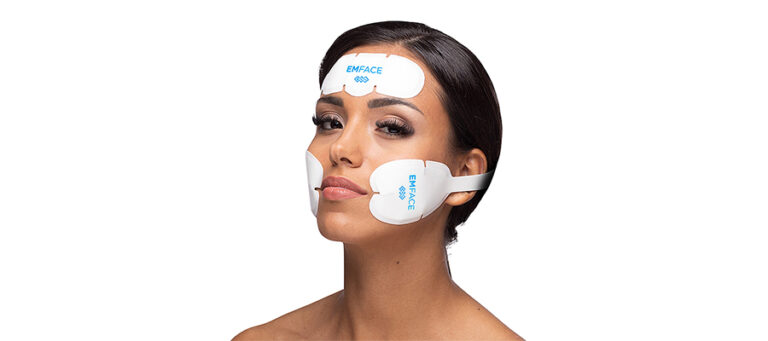
- EMFACE® — A completely non-invasive, needle-free treatment that uses synchronized radiofrequency and HIFES electromagnetic energy to tone facial muscles and tighten skin simultaneously. It can also be used to address EMFACE facial contouring goals, including definition in the cheeks and jawline. Learn more about EmFace Function & Aesthetics Services.
- EXION RF Ultrasound — A non-invasive, needle-free treatment that combines monopolar radiofrequency and targeted ultrasound to tighten skin, boost collagen, and naturally increase hyaluronic acid. Learn more about EXION RF Ultrasound Rejuvenation.
- EXION RF Microneedling — A minimally invasive treatment using precision microneedles to deliver radiofrequency energy into the deeper layers of the skin, stimulating collagen production and improving skin texture and firmness. Learn more about EXION RF Microneedling.
- Laser Skin Resurfacing — The ReNew Waterlase laser skin resurfacing addresses surface-level changes associated with collagen loss, including texture irregularities, pigmentation, and skin quality concerns.
The right treatment depends on where collagen loss is most affecting your face and which layers are most involved. A structured assessment before treatment ensures that recommendations are matched to your actual skin condition rather than a generalized approach.
When should you see a professional about collagen loss?
You should see a professional about collagen loss when the changes you are noticing in your skin affect how you feel about your appearance, or when you are uncertain whether what you are seeing is within the range of normal aging. There is no threshold of severity that must be crossed before a consultation is appropriate. Earlier assessment generally means more options and more gradual, natural-looking results.
Specific situations that warrant a professional evaluation include:
- Skin laxity or loss of definition in the jawline, cheeks, or under-eye area that has become noticeable over the past one to two years
- Fine lines that are now visible at rest rather than only with expression
- A change in overall skin quality, including dullness, thinning, or crepey texture that skincare products are not addressing
- Rapid changes in facial appearance, particularly in the context of significant weight loss or hormonal transition
A professional consultation provides something that self-assessment and online research cannot: an objective evaluation of what is actually happening in your skin, at a level of detail that makes treatment planning meaningful rather than speculative. Our Signature Rejuvenation Pathways offer a structured framework for addressing collagen loss with a personalized, comprehensive plan.
Not Sure What’s Causing the Changes You’re Seeing?
If you’re noticing looser skin, fine lines, under-eye changes, or loss of facial definition, a professional skin assessment can help us better understand what may be contributing to those changes and discuss options appropriate for your skin and your goals.