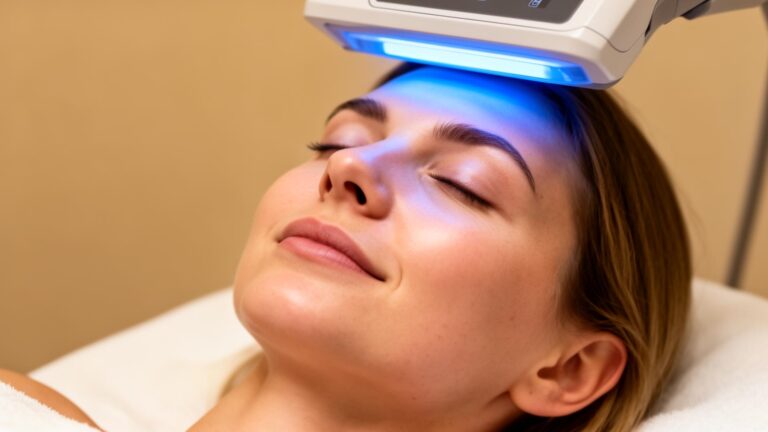
Yes, RF microneedling does tighten skin by combining microneedling with radiofrequency energy to stimulate deep collagen production. This dual-action treatment creates controlled micro-injuries while delivering heat energy to deeper skin layers, triggering the body’s natural healing response and promoting firmer, tighter skin over time.
What is RF microneedling and how does it work to tighten skin?
RF microneedling combines traditional microneedling with radiofrequency energy to deliver deeper skin-tightening results than either treatment alone. The procedure uses fine needles to create controlled micro-channels in the skin while simultaneously delivering radiofrequency energy through these channels into the deeper dermal layers.
This dual approach triggers two important healing responses. The microneedling component stimulates surface-level collagen production and improves skin texture, while the radiofrequency energy heats the deeper tissues to temperatures that cause existing collagen fibers to contract immediately and stimulate new collagen formation over the following months.
The heat energy reaches depths that topical treatments cannot access, making it particularly effective for addressing skin laxity, fine lines, and texture concerns. The controlled thermal injury prompts your body to produce fresh collagen and elastin, which are the proteins responsible for skin firmness and elasticity.
How long does it take to see skin-tightening results from RF microneedling?
You can expect to see initial skin tightening within 2–4 weeks after RF microneedling, with continued improvements developing over 3–6 months as new collagen forms. The most dramatic results typically appear around the 3-month mark, when collagen remodeling reaches its peak.
Immediate effects include mild swelling that can temporarily tighten the skin’s appearance, but this subsides within a few days. The real tightening begins as your skin heals and starts producing new collagen. Most patients notice smoother texture and subtle firming within the first month.
Several factors influence your results timeline, including your age, skin condition, treatment depth, and individual healing response. Younger patients with better baseline collagen production often see results more quickly. The number of treatments also affects timing—most people need 3–4 sessions spaced 4–6 weeks apart for optimal skin-tightening results.
What areas of the body can be treated with RF microneedling for skin tightening?
RF microneedling effectively tightens skin on the face, neck, décolletage, and various body areas where skin laxity is a concern. The treatment is particularly popular for facial rejuvenation, addressing areas like the jawline, cheeks, forehead, and around the eyes.
The neck and décolletage respond especially well to RF microneedling because these areas often show early signs of aging and have thinner skin that benefits from the deeper energy delivery. Many patients choose to treat these areas together with facial treatments for comprehensive rejuvenation.
Body areas that can benefit include the abdomen, arms, thighs, and other locations with mild to moderate skin looseness. The treatment works on most skin types, though darker skin tones require careful settings to avoid pigmentation changes. Areas with very loose skin may need multiple sessions or combination treatments for optimal tightening results.
How does RF microneedling compare to other skin-tightening treatments?
RF microneedling offers a middle ground between non-invasive and surgical options, providing more significant tightening than creams or basic facials while requiring less downtime than surgical procedures. It typically produces better results than standalone radiofrequency or microneedling treatments.
Compared to laser treatments, RF microneedling works well on all skin tones and has a lower risk of pigmentation issues. The recovery time is generally 3–5 days of redness and mild swelling, which is less than ablative laser resurfacing but more than non-invasive radiofrequency treatments.
When choosing between skin-tightening options, consider your goals, budget, and available downtime. RF microneedling works best for mild to moderate skin laxity and for those seeking gradual, natural-looking improvements. For severe sagging, surgical options may be more appropriate, while minimal concerns might respond well to gentler treatments like regular facials or topical retinoids.