A skin analysis consultation is a structured clinical assessment of your skin’s current condition, concerns, and underlying health – used to guide personalized treatment recommendations. Rather than relying on a visual impression or a patient’s self-reported concerns alone, a professional skin analysis uses imaging technology and clinical evaluation to build an objective picture of what your skin actually needs. The sections below address the most common questions patients have before booking their first skin consultation.
What happens during a skin analysis consultation?
During a skin analysis consultation, a clinician evaluates your skin using a combination of advanced imaging technology and a detailed conversation about your goals, concerns, and lifestyle. The process produces a data-supported baseline of your skin’s condition across multiple dimensions, including texture, pigmentation, redness, and signs of structural aging. It typically takes 30 to 60 minutes and does not involve any treatment.
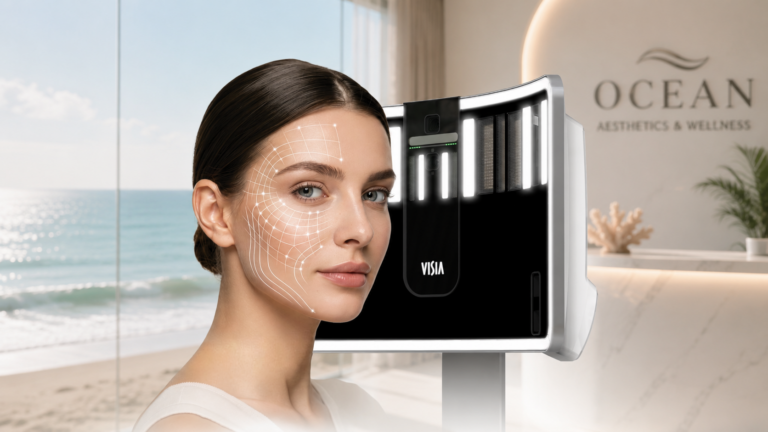
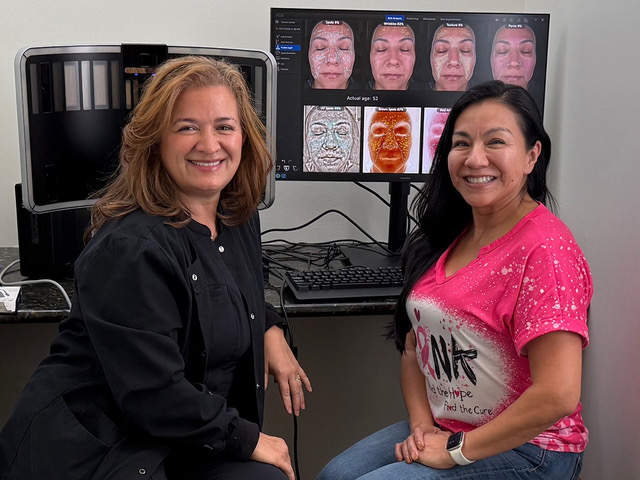
At Ocean Aesthetics & Wellness, the Visia Skin Analysis uses AI-powered 3D facial imaging to capture multi-spectral photographs of your face. These images reveal features that are not visible to the naked eye, including subsurface UV damage, early pigmentation changes, and vascular patterns beneath the skin’s surface. The system then compares your results against an age-matched database, giving you an objective reference point rather than a subjective impression.
After the imaging, a clinician reviews your results with you directly. This is not a passive handoff of a report. You receive a clear explanation of each finding, what it means for your skin, and how it connects to your aesthetic goals. That conversation is what transforms a skin assessment from a data exercise into a meaningful clinical consultation.
What skin concerns can a skin analysis detect?
A professional skin analysis can detect a broad range of concerns, including surface texture irregularities, uneven skin tone, enlarged pores, fine lines and deeper structural changes, UV damage and pigmentation that is not yet visible to the eye, diffuse redness and vascular patterns, and signs of collagen loss and skin laxity. Many of these findings would not be identified through a standard visual examination.
One of the most clinically valuable aspects of advanced skin imaging is its ability to surface concerns that patients are not yet aware of. Sun damage, for example, often exists as subsurface pigmentation years before it becomes visible as a dark spot. For patients living in a sun-rich environment like Hilton Head, this kind of early detection can meaningfully shape a treatment plan.
The assessment also evaluates structural aging patterns, distinguishing between concerns that originate at the skin’s surface, in the dermis, or in the underlying muscle layer. This distinction matters because different concerns respond to different treatments. A skin analysis ensures that the recommended approach is matched to where the problem actually originates, not just what appears most visible.
How is a professional skin analysis different from a DIY skin quiz?
A professional skin analysis is fundamentally different from an online skin quiz because it is based on clinical imaging and objective data rather than self-reported answers. Online quizzes rely entirely on how a patient perceives their own skin, which is inherently limited by what they can see, feel, and accurately describe. A professional skin assessment removes that subjectivity and replaces it with measurable findings.
Self-assessment tools can be useful for general orientation, helping someone identify whether their skin tends to be oily or dry, or whether they are primarily concerned with pigmentation versus texture. But they cannot detect subsurface UV damage, quantify collagen density changes, map vascular patterns, or compare your skin against age-matched norms. These are capabilities that require clinical technology.
There is also a meaningful difference in what comes after. A DIY quiz typically ends with a product recommendation or a generic skin type label. A professional skin consultation ends with a personalized treatment plan developed by a clinician who has reviewed your actual findings in the context of your specific goals. The two serve different purposes, and for anyone considering aesthetic treatment, there is no substitute for the clinical version.
What treatment recommendations come out of a skin analysis?
Treatment recommendations from a skin analysis are based directly on what the assessment reveals about your skin’s current condition and where it is most affected by aging, damage, or structural change. Rather than applying a one-size-fits-all protocol, the clinician uses the imaging findings to identify which concerns are most significant, which layers of the skin are involved, and which treatments are most appropriate for your specific profile.
Common recommendations following a skin analysis include treatments targeting skin quality and texture, collagen stimulation, pigmentation and sun damage, muscle tone and structural lift, or a combination of these. At Ocean Aesthetics & Wellness, findings from the advanced skin imaging directly inform whether a patient is best served by EMFACE for muscle tone and structural support, EXION for collagen rebuilding and skin refinement, laser skin resurfacing for surface-level pigmentation and texture concerns, or a structured combination approach through the Signature Rejuvenation Pathways.
Importantly, treatment recommendations from a skin analysis are not a sales script. They are a clinical response to what the data shows. Patients who complete a skin assessment often find that their actual priorities shift once they see the objective findings, because what concerns them most in the mirror is not always what the imaging identifies as the most significant underlying issue.
Who should get a professional skin analysis consultation?
A professional skin analysis consultation is appropriate for any adult who wants to understand their skin’s current condition before committing to a treatment, is considering facial rejuvenation but is unsure where to start, or has concerns about pigmentation, redness, texture, or aging that have not been fully addressed through previous approaches. It is equally useful for patients new to aesthetic care and those who have had prior treatments and want a more structured, data-informed path forward.
Patients who are actively comparing non-invasive treatment options benefit particularly from a skin analysis because the assessment removes the guesswork from that decision. Rather than choosing a treatment based on what seems reasonable or what a friend recommended, the consultation gives you a clinical basis for your choices.
A skin analysis is also well suited for patients who want to track measurable progress over time. The baseline imaging established at your first consultation becomes a reference point for follow-up assessments, allowing you to see documented improvements in texture, pigmentation, and skin quality rather than relying on memory or subjective impression. If you are ready to begin with clarity rather than assumptions, you can schedule a courtesy consultation at Ocean Aesthetics & Wellness to see exactly where your skin stands today.