For most people, dermal fillers are the more effective treatment for marionette lines because they directly restore the lost volume that causes these lines to deepen. Botox can play a supporting role by relaxing the muscles that pull the corners of the mouth downward, but it rarely delivers the same visible improvement on its own. The best approach often combines both, though non-injectable alternatives are worth knowing about too.
What causes marionette lines to form?
Marionette lines form when the skin loses volume, collagen, and structural support over time, allowing gravity to pull the tissue downward from the corners of the mouth toward the chin. The result is a fold or crease that can make the face look tired or stern, even when you feel completely relaxed.
Several factors contribute to their development. As we age, the body produces less collagen and elastin, the proteins responsible for keeping skin firm and resilient. Fat pads in the mid-face also shift and shrink, removing the structural scaffolding that once kept the lower face looking lifted. The depressor anguli oris muscle, which runs from the corner of the mouth downward, can pull the mouth corners down more noticeably as surrounding tissue loses its resistance. Sun exposure, genetics, and lifestyle factors like smoking can accelerate this process, which is why some people notice these lines appearing earlier than others.
How does Botox treat marionette lines?
Botox treats marionette lines by relaxing the depressor anguli oris muscle, which is the muscle responsible for pulling the corners of the mouth downward. When this muscle is gently weakened with a small injection, the corners of the mouth can rest in a more neutral or slightly upward position, softening the appearance of the lines.
This approach works best when the lines are still relatively mild and the main issue is muscle activity rather than significant volume loss. Botox does not add volume or fill in the crease itself, so if the marionette lines are deep or caused primarily by tissue deflation, Botox alone will not produce a dramatic result. It is most effective as part of a broader treatment plan, often used alongside fillers to address both the muscular pull and the structural deficit at the same time.
How do dermal fillers treat marionette lines?
Dermal fillers treat marionette lines by physically restoring volume to the area, plumping the tissue from beneath to smooth the crease and lift the surrounding skin. Hyaluronic acid fillers are the most commonly used option because they are temporary, adjustable, and attract moisture to the area, which helps maintain a natural appearance.
A skilled injector will typically place filler along the marionette line itself and sometimes in the cheek or mid-face area to restore the structural support that has shifted over time. Addressing the root cause of volume loss in the upper face often reduces the depth of marionette lines more effectively than treating the crease alone. Results are usually visible immediately and can last anywhere from six months to over a year depending on the type of filler used and how quickly your body metabolizes it. Because fillers directly replace what has been lost, most people find them to be the most straightforward and impactful treatment for noticeable marionette lines.
Which is better for marionette lines — Botox or fillers?
Fillers are generally better for marionette lines because they address the primary cause, which is volume loss and tissue deflation. Botox can complement the result by relaxing the downward-pulling muscle, but it cannot fill in a crease or restore lost structure on its own. For most people, fillers deliver a more noticeable and lasting improvement.
That said, the right choice depends on what is driving your specific lines. If your marionette lines are subtle and mainly caused by muscle activity, a small amount of Botox in the depressor anguli oris may be sufficient. If the lines are moderate to deep, fillers will almost certainly be the more effective option. Many practitioners recommend combining both treatments for the most balanced outcome, using Botox to reduce the downward pull and fillers to restore volume and smooth the crease.
Is there a non-injectable option for marionette lines?
For people who prefer to avoid needles, or who are simply curious about what non-injectable treatments can do, there are options worth considering — though it is important to have realistic expectations about what they can and cannot achieve.
EMFACE combines synchronized radiofrequency energy with high-intensity facial electrical stimulation (HIFES) to tone facial muscles and stimulate collagen and elastin in the skin simultaneously. Rather than adding volume from the outside, it works to rebuild the lower face’s natural structural support from within. For some people, particularly those with mild to moderate laxity, this approach can meaningfully improve the appearance of marionette lines. It is not equivalent to fillers or Botox, and deeper folds may not be fully corrected without injectable treatment. You can learn more about how the two approaches compare in this EMFACE vs Botox comparison, or explore EMFACE facial contouring for lower-face support to see how it is applied in practice.
If you want a broader overview of your options, this guide on other ways to soften marionette lines covers additional approaches worth knowing about.
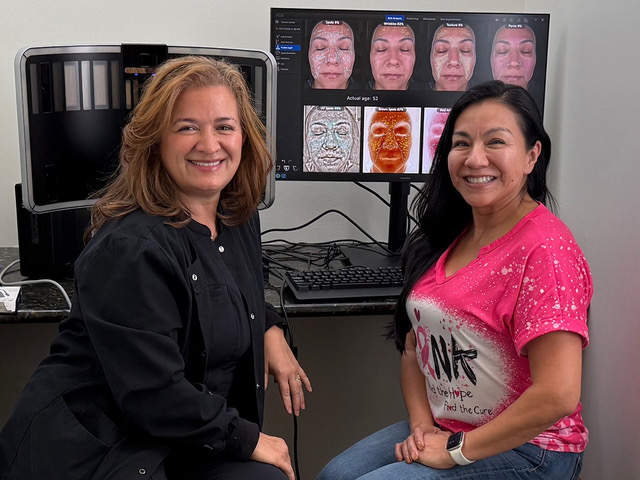
At Ocean Aesthetics & Wellness on Hilton Head Island, we offer a complimentary consultation of about 20 minutes that includes a VISIA skin analysis, so you can get a clear picture of what is contributing to your concerns before deciding on a path forward. If you would like to discuss non-injectable options at a consultation, we are happy to help you find an approach that fits your goals and your comfort level.