Age spots appear suddenly because of cumulative sun exposure that finally crosses a threshold your skin can no longer manage quietly. Melanin, the pigment your skin produces to protect itself from UV radiation, builds up unevenly over time, and one day those patches become visible on the surface. The sections below walk through the most common questions people ask once they notice those first dark spots appearing.
What causes age spots to appear suddenly?
Age spots seem to appear overnight, but they are actually the result of years of sun exposure finally becoming visible. When UV rays repeatedly stimulate melanin production, pigment can accumulate in concentrated pockets beneath the skin’s surface. Once enough builds up, those pockets break through as the flat, brown, or tan spots commonly called age spots, sun spots, or hyperpigmentation.
Several factors can trigger that sudden appearance:
- A summer of high sun exposure after years of moderate exposure can push pigment over the visible threshold
- Hormonal changes from menopause, pregnancy, or certain medications can accelerate melanin production
- A thinning skin barrier makes pigment easier to see, even if it was already present beneath the surface
- Certain medications, including some antibiotics and blood pressure drugs, can increase photosensitivity and speed up dark spot formation
The word “suddenly” is a little misleading. The skin discoloration was developing for a long time. What changed is that it finally became impossible to ignore.
Why do age spots get worse as you get older?
Age spots get worse with age because the skin’s ability to regulate and repair melanin production declines over time. Younger skin turns over rapidly, shedding pigmented cells before they accumulate visibly. As you age, cell turnover slows, damaged cells linger longer, and years of UV exposure compound into increasingly pronounced dark spots on the skin.
There is also a structural reason. Collagen and elastin production decreases with age, which thins the skin and makes pigment closer to the surface more visible. Additionally, the melanocytes (the cells that produce melanin) become less evenly distributed over time, which is why older skin tends to show patchy, uneven tone rather than a smooth, consistent complexion.
Sun exposure throughout your lifetime is cumulative. Every unprotected hour outdoors adds to the total. By the time most people notice age spots in their 40s or 50s, they are seeing the result of decades of UV exposure, not just recent summers.
Are age spots a sign of something serious?
Most age spots are harmless and are not a sign of a serious medical condition. They are a cosmetic concern caused by UV-triggered melanin accumulation, not a health risk. However, it is important to distinguish a true age spot from other types of skin discoloration, because some lesions that resemble age spots can be early signs of skin cancer.
A dermatologist or physician should evaluate any spot that:
- Has an irregular or uneven border
- Contains multiple colors, such as brown mixed with black, red, or white
- Is growing, changing shape, or changing color
- Is raised, rough, or has an unusual texture
- Bleeds or itches persistently
Classic age spots are flat, uniformly colored (light tan to dark brown), and have smooth, well-defined edges. If a spot matches that description and has been stable over time, it is almost certainly a benign cosmetic concern. When in doubt, always get a professional opinion before pursuing any treatment for skin discoloration.
What treatments actually fade age spots?
Several treatments can effectively fade age spots by targeting excess melanin, accelerating cell turnover, or remodeling the skin layers where pigment accumulates. The most effective options combine surface-level pigment reduction with deeper skin renewal for lasting results.
Topical treatments
Over-the-counter options like vitamin C serums, niacinamide, and azelaic acid can brighten mild hyperpigmentation with consistent use over several months. Prescription-strength retinoids and hydroquinone work more aggressively to suppress melanin production and speed up cell turnover. These are good maintenance tools but rarely eliminate established dark spots on their own.
Professional in-office treatments
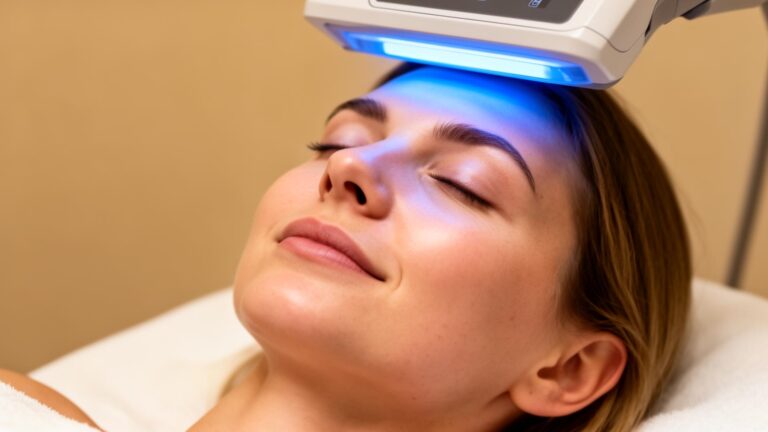
For more visible or stubborn age spots, professional treatments deliver faster and more significant results. Exion Clear RF uses radiofrequency energy to target surface-level pigmentation irregularities, including sun spots and age spots, while improving overall skin clarity and tone. For deeper correction, laser skin resurfacing removes the damaged outer skin layer and stimulates collagen renewal, revealing fresher, more even-toned skin underneath. Both approaches work by addressing the underlying cause of the discoloration rather than just masking it.
The right approach depends on how deep the pigment sits, your skin type, and how quickly you want results. A consultation is the best way to identify which treatment or combination makes the most sense for your skin.
How can you stop new age spots from forming?
The single most effective way to prevent new age spots from forming is consistent, daily sun protection. Since UV exposure is the primary driver of melanin overproduction, limiting that trigger is the most direct way to stop new dark spots from developing. Prevention is significantly easier than correction.
Practical habits that make a real difference include:
- Wearing broad-spectrum SPF 30 or higher every day, even on cloudy days and during winter months
- Reapplying sunscreen every two hours when outdoors, and after swimming or sweating
- Wearing protective clothing, wide-brim hats, and UV-blocking sunglasses when spending extended time outside
- Seeking shade during peak UV hours, typically between 10 a.m. and 4 p.m.
- Using antioxidant serums like vitamin C in the morning to neutralize free radical damage from UV exposure
- Maintaining skin cell turnover with retinoids or exfoliating acids to prevent pigment from accumulating
If you are already treating existing age spots, sun protection is not optional. UV exposure will undo the results of any treatment and trigger new spots to form. Think of SPF as the foundation that makes every other skin investment worthwhile.
If you are ready to address existing hyperpigmentation and want a personalized plan, we would love to help. Schedule a courtesy consultation with us at Ocean Aesthetics and Wellness in Hilton Head Island to explore which treatment options are the right fit for your skin.