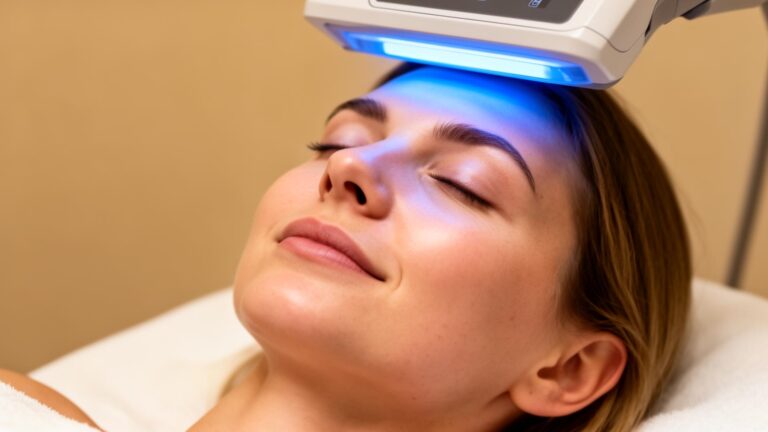
RF microneedling is highly effective for acne scars because it combines traditional microneedling with radiofrequency energy to stimulate deep collagen remodeling. This dual-action treatment addresses all types of acne scarring by creating controlled micro-injuries while delivering heat to deeper skin layers, promoting significant tissue regeneration and skin texture improvement over time.
What is RF microneedling and how does it target acne scars?
RF microneedling combines traditional microneedling with radiofrequency energy to create a powerful acne scar treatment. The device uses tiny needles to create controlled micro-channels in the skin while simultaneously delivering radiofrequency heat to deeper tissue layers. This dual mechanism triggers the body’s natural healing response and stimulates robust collagen production.
The treatment effectively targets different types of acne scars through specific mechanisms. For ice pick scars, the precise needle penetration breaks down scar tissue in narrow, deep channels. Boxcar scars respond well because the radiofrequency energy heats the broader scar base, promoting collagen remodeling across wider areas. Rolling scars improve as the treatment releases fibrous bands beneath the skin while stimulating new collagen formation.
The radiofrequency component sets this treatment apart from traditional microneedling. While standard microneedling only creates surface micro-injuries, RF microneedling delivers controlled heat energy deep into the dermis. This thermal effect enhances collagen synthesis and tissue remodeling, making it particularly effective for mature, established acne scars that haven’t responded to other treatments.
How does RF microneedling compare to other acne scar treatments?
RF microneedling offers unique advantages compared to other acne scar treatments. Unlike chemical peels that only address surface irregularities, RF microneedling penetrates deeper to remodel scar tissue at the dermal level. It’s less aggressive than ablative laser resurfacing but more effective than traditional microneedling alone.
Compared to dermal fillers, RF microneedling provides permanent improvement rather than temporary volume. Fillers work well for rolling scars but require ongoing maintenance every 12–18 months. RF microneedling builds lasting results by stimulating your own collagen production, making it more cost-effective long-term.
Traditional microneedling addresses surface texture but lacks the deep tissue heating that makes RF microneedling so effective for established scars. Laser resurfacing can provide dramatic results but requires significant downtime and carries higher risks. RF microneedling offers substantial improvement with minimal recovery time, making it suitable for most skin types and lifestyles.
What results can you realistically expect from RF microneedling for acne scars?
Most patients see gradual improvement beginning 4–6 weeks after treatment, with continued enhancement for up to six months. The progressive nature of collagen remodeling means results develop slowly but provide lasting improvement. Shallow acne scars typically show 50–70% improvement, while deeper scars may achieve a 30–50% reduction in appearance.
Several factors influence treatment outcomes. Newer, less established scars generally respond better than old, mature scarring. Skin type, age, and overall skin health affect healing capacity and collagen production. Realistic expectations are important because while RF microneedling significantly improves skin texture and scar appearance, it rarely achieves completely smooth skin.
Ice pick scars often require the most treatments for noticeable improvement, while rolling scars typically respond most favorably. Boxcar scars fall somewhere between, with moderate to good improvement expected. The treatment works best as part of a comprehensive approach that may include proper skincare and sun protection to support optimal healing and results.
How many RF microneedling sessions are needed for acne scar improvement?
Most patients need 3–4 RF microneedling sessions spaced 4–6 weeks apart for optimal acne scar improvement. The spacing allows adequate healing time between treatments while maintaining momentum in collagen production. Some patients with severe scarring may benefit from additional sessions to achieve their desired results.
Treatment protocols depend on scar severity and individual healing response. Mild scarring may show satisfactory improvement after 2–3 sessions, while extensive or deep scarring often requires 4–6 treatments. Your skin’s response to the initial treatment helps determine the total number of sessions needed for your specific situation.
Maintenance sessions every 6–12 months can help sustain long-term results by continuing collagen stimulation. These periodic treatments aren’t always necessary but can be beneficial for maintaining skin texture improvements and addressing any new scarring that may develop. The investment in a complete treatment series typically provides lasting improvement that makes maintenance worthwhile.
RF microneedling represents an excellent middle-ground treatment for acne scars, offering significant improvement with manageable downtime. While results take time to develop, the lasting nature of collagen remodeling makes it a worthwhile investment for most people struggling with acne scarring. Schedule a consultation to learn more about how RF microneedling can address your specific scarring concerns.