Teeth Grinding: Understand What Is Behind It.
Grinding teeth, often at night, can wear teeth and strain the jaw. Learn what may drive it and where non-surgical care may fit alongside dental care.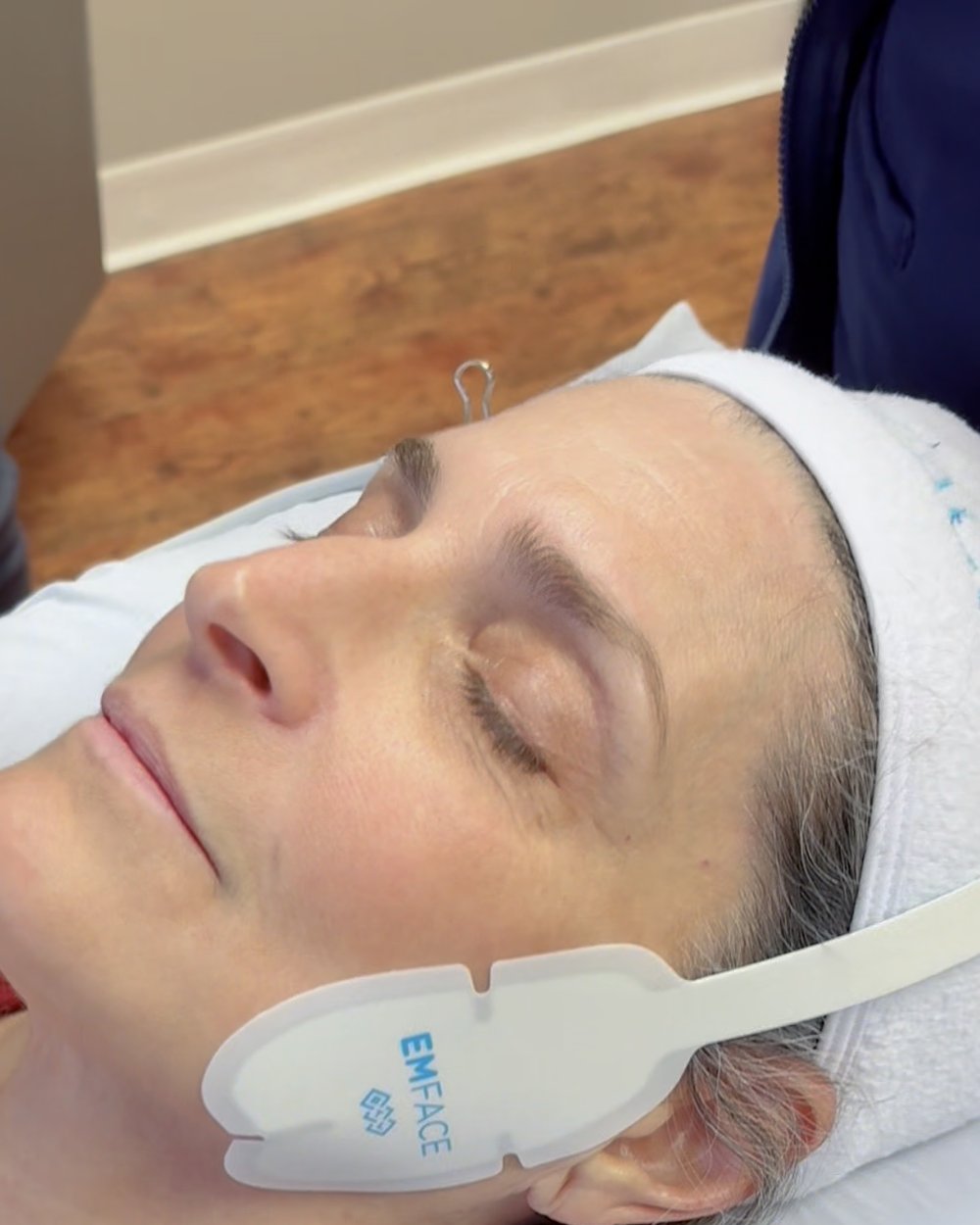
What Is Teeth Grinding?
Teeth grinding, or bruxism, is repeated grinding or clenching, often during sleep.
Many people do not realize they grind until a partner or dentist notices.
Because grinding affects teeth as well as muscles, dental care is an important part of the picture.
What Can Cause Teeth Grinding?
Teeth grinding has several possible contributors.
Stress and Anxiety
Stress and anxiety are among the most common triggers for grinding, both during the day and at night.
Sleep Factors
Grinding often happens during sleep and can be linked to sleep quality and some sleep disorders.
Bite and Dental Alignment
The way your teeth fit together can contribute to grinding, which is why a dental evaluation is important.
Muscle Habit
Grinding can become an automatic habit, especially during concentration or physical effort.
Lifestyle
Caffeine, alcohol, smoking and some medications can increase grinding in some people.
Individual Differences
Jaw shape, muscle strength and genetics influence who grinds and how much it affects the teeth and jaw.
What May Help, and How We Can Help
Teeth grinding involves both the teeth and the jaw muscles. These are the patterns we see most often, and how we approach each one.
Grinding During Sleep
How it often looks: waking with a sore jaw, tired muscles or a partner noticing grinding sounds.
What may help: protecting the teeth and easing muscle tension.
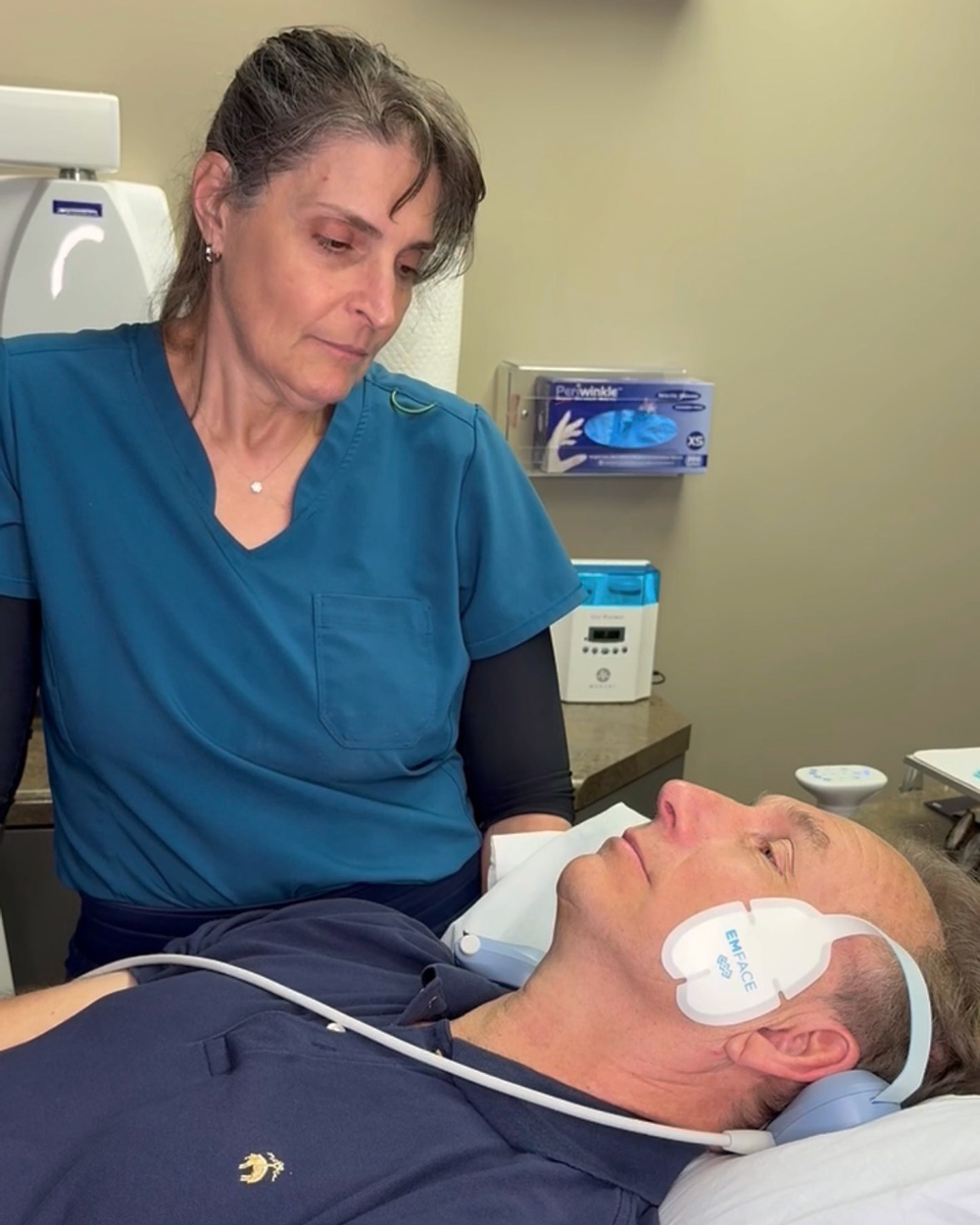
How we can help: a dental evaluation, for example with Ocean Dental, can assess your teeth, and EMFACE TMJ treatment can help relax the overworked jaw muscles, with no downtime. Learn about EMFACE TMJ.
Worn or Sensitive Teeth
How it often looks: flattened, chipped or sensitive teeth from grinding over time.
What may help: a dental evaluation of your teeth and bite.
How we can help: we will recommend seeing a dentist, because tooth wear needs dental care.
Headaches and Facial Soreness
How it often looks: tension headaches or soreness in the cheeks and temples, especially in the morning.
What may help: relaxing the jaw and temple muscles.
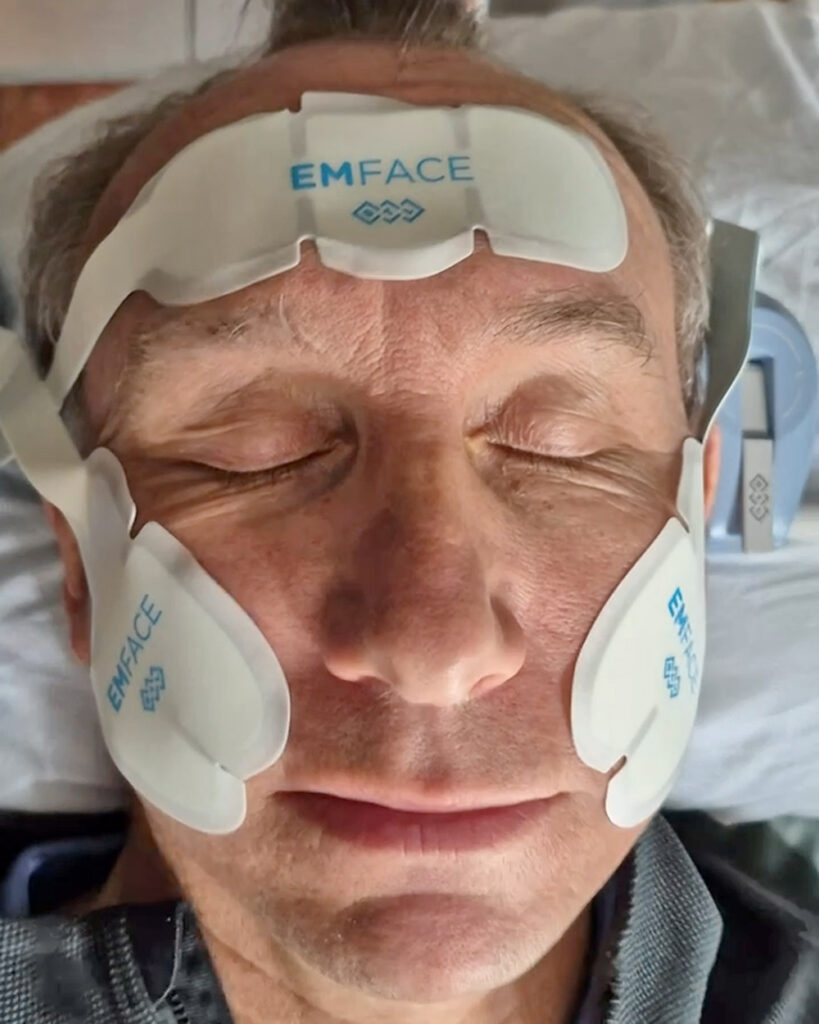
How we can help: EMFACE TMJ works on the masseter and temporalis muscles. If headaches are severe or new, please see a physician first.
Daytime Grinding or Clenching
How it often looks: grinding or clenching while concentrating or under stress.
What may help: relaxing the muscles alongside habit awareness.
How we can help: EMFACE TMJ can help relax tight muscles, and noticing the habit during the day can help reduce it.
Grinding With Jaw Joint Symptoms
How it often looks: clicking, locking or pain in the jaw joint together with grinding.
What may help: an evaluation of the joint by a dental or medical professional.
How we can help: we will tell you if your symptoms point to the joint and help you understand the right next step.
A realistic expectation: less muscle tension and morning soreness over a series of treatments. EMFACE TMJ focuses on the muscles and does not replace dental care for your teeth.
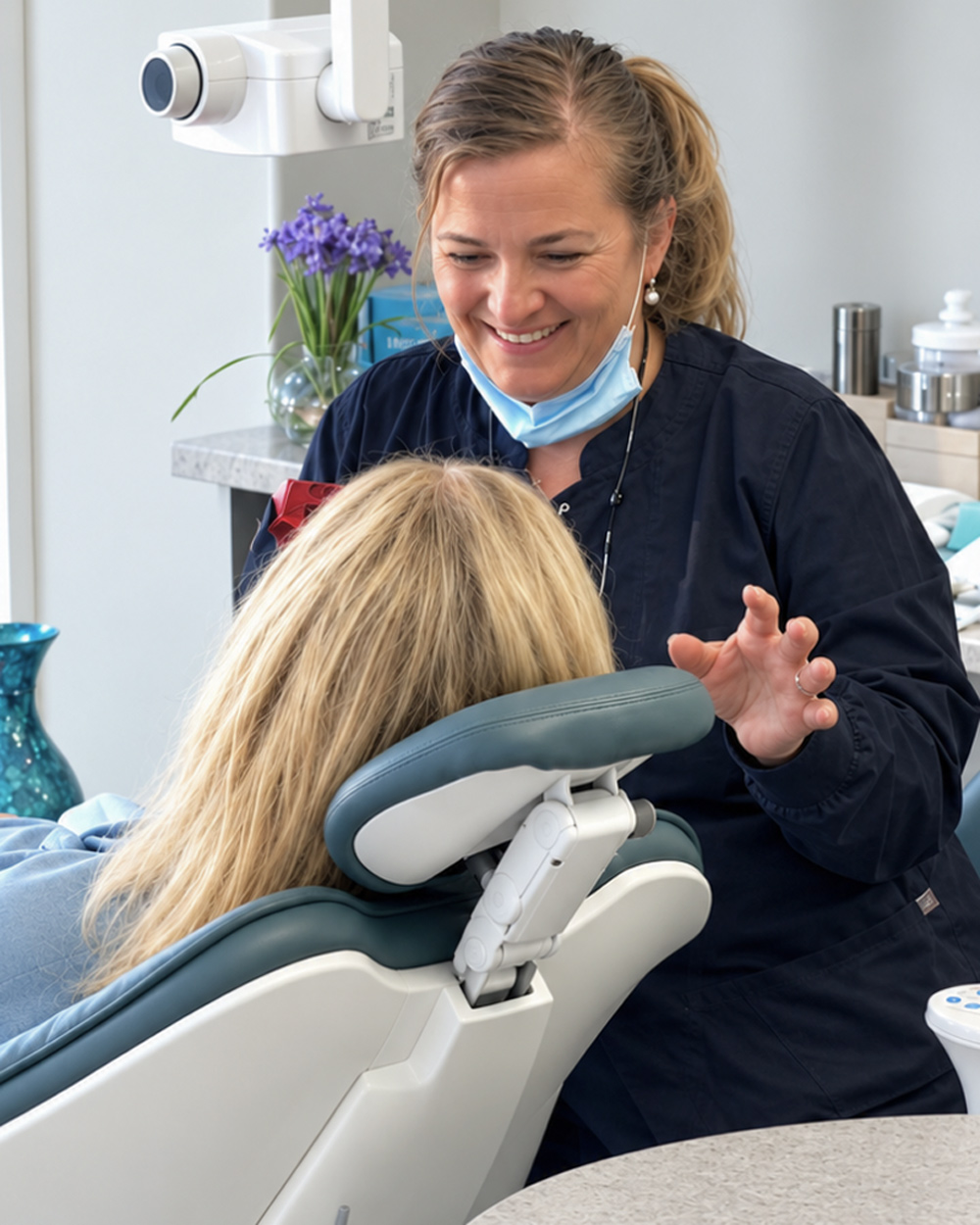
Not sure which type you have? That is what your Courtesy Consultation is for. Dr. Sugg, a dentist, and her team assess your jaw, bite and facial muscles and give you a clear, honest plan with no obligation. Schedule a Courtesy Consultation.

A Personalized Assessment Comes First.
Grinding involves teeth and muscles, so we coordinate with dental care where needed.
At your Courtesy Consultation, Dr. Sugg, a dentist, and her team discuss your symptoms, examine your jaw muscles and review your history. If your teeth or bite need dental care, we will tell you.
If your concern appears better suited to a different type of provider, we will tell you so, and we will not recommend a treatment that is unlikely to help.
Where EMFACE TMJ Treatment May Fit.
For jaw discomfort linked mainly to tight, overactive muscles, EMFACE TMJ treatment may be worth discussing.
Radiofrequency energy gently warms the tissue to help relax muscle spasm and improve local circulation.
HIFES™ muscle stimulation works on the masseter, temporalis and surrounding muscles to help rebalance them.
EMFACE TMJ is non-invasive, with no injections and no downtime. A series of treatments is usually recommended.
Jaw pain can also have dental or joint causes, so a dental or medical evaluation is an important part of care. We will tell you if we think one is needed first.
Learn more: EMFACE TMJ · Ocean Dental
Related Concerns and Next Steps
Teeth grinding often involves more than one factor. Explore the concern or resource that fits you best.
TMJ Pain
Pain, clicking or tightness around the jaw joint. Learn about common causes and why a dental or medical evaluation comes first.
Jaw Tension & Clenching
Tight, overworked jaw muscles from clenching during the day or night. Learn about the signs and how EMFACE TMJ may help alongside dental care.
TMJ & Jaw Tension Overview
An overview of TMJ pain, clenching and grinding. Learn how EMFACE TMJ may relax tense jaw muscles alongside dental care.
EMFACE TMJ Treatment
EMFACE TMJ uses targeted muscle stimulation to help relax tense jaw muscles. Learn how it works alongside dental care.
Ocean Dental
Our sister practice, Ocean Dental, led by Dr. Sugg. Dental evaluation of the teeth, bite and jaw joint is an important part of TMJ care.
Facial Contours & Jawline
How changing volume and firmness reshape the face over time. Explore jawline definition, volume loss and changes after weight loss.
Frequently Asked Questions About Teeth Grinding


Ready to Understand Your Teeth Grinding?
You do not have to know what is behind your teeth grinding or which treatment to choose. Schedule a Courtesy Consultation at Ocean Aesthetics & Wellness in Hilton Head Island or Bluffton, and we will talk through what is happening and which options may suit you.