A skin analysis is worth it before starting aesthetic treatments. It removes the guesswork from your consultation by giving your provider objective, clinical data about your skin’s current condition, rather than relying on visual impressions alone. The sections below address the most common questions patients ask before deciding whether to get one.
What does a professional skin analysis actually involve?
A professional skin analysis is a structured clinical assessment that evaluates your skin’s condition across multiple dimensions, using imaging technology and clinical observation to build an accurate picture of where your skin is today. It is not a facial, a treatment, or a sales consultation. It is a diagnostic step that informs everything that follows.
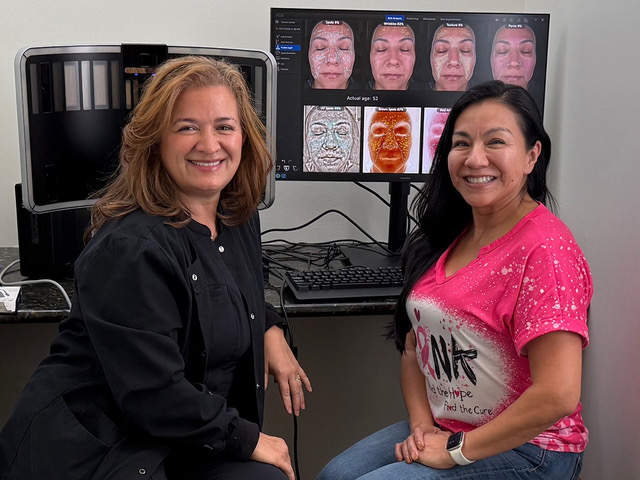
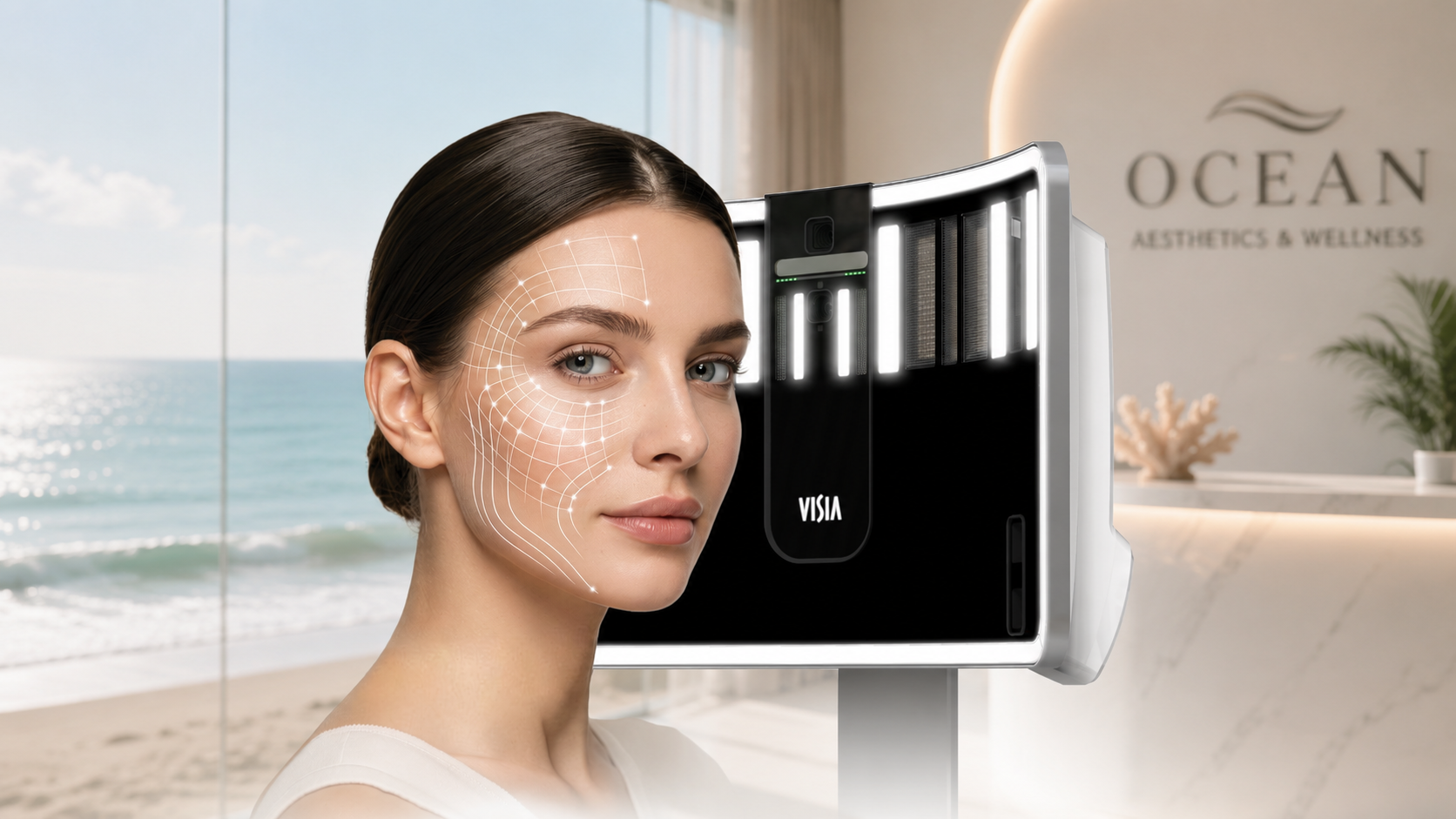
At Ocean Aesthetics & Wellness, skin analysis is performed using VISIA skin analysis, an AI-powered 3D complexion imaging system that captures multi-spectral images of your face. This technology evaluates your skin at multiple wavelengths simultaneously, revealing features that are not visible to the naked eye or detectable through a standard mirror consultation.
During the assessment, a clinician evaluates several layers of skin health at once, including:
- Surface texture and tone — pore size, skin smoothness, and overall uniformity
- Fine lines and wrinkles — both visible surface lines and deeper structural changes developing beneath the skin
- Pigmentation and UV damage — including subsurface sun damage not yet visible to the eye
- Redness and vascular patterns — diffuse redness, visible vessels, and inflammatory changes
- Collagen health and skin laxity — signs of structural aging and tissue support loss
- Overall skin age — benchmarked against age-matched norms using the system’s database
The result is a consultation grounded in clinical data, not impressions. You leave with a clear, documented understanding of your skin’s actual condition and a concrete starting point for any treatment decisions.
How does a skin analysis change your treatment plan?
A skin analysis changes your treatment plan by replacing assumptions with evidence. Instead of recommending treatments based on what a patient reports or what a clinician observes briefly in-room, the assessment reveals which skin layers are most affected, which concerns are most clinically significant, and which treatment approaches are genuinely matched to your skin’s needs.
This distinction matters more than it might initially seem. Two patients who describe the same concern, say, dull skin and visible aging, may have very different underlying causes. One may have significant UV-related pigmentation developing beneath the surface. Another may have collagen loss and muscle laxity as the primary driver. Without objective data, both patients might receive similar recommendations. With a skin analysis, the treatment plan reflects what is actually happening in their skin.
In practical terms, the assessment findings guide decisions about which treatment modality is most appropriate, how treatments should be sequenced, and which areas of the face need the most attention. A patient for whom collagen stimulation is the primary need is directed toward a different approach — such as Exion Therapy & Aesthetics — than one for whom surface pigmentation and texture refinement are the central findings. The analysis ensures that the plan is structured around your skin’s actual condition, not a general protocol.
It also creates a meaningful baseline. Follow-up imaging at key points in your treatment journey allows for objective comparison, documenting changes in texture, pigmentation, and skin quality that might otherwise go unnoticed because they develop gradually over time.
Can you skip a skin analysis if you already know your skin type?
Knowing your skin type is useful, but it is not the same as a clinical skin assessment. Skin type, whether dry, oily, combination, or sensitive, describes how your skin behaves under normal conditions. A professional skin analysis evaluates the structural and biological condition of your skin, including concerns that have no obvious symptoms yet and patterns that are not visible without imaging technology.
Many patients who feel confident about their skin type are still surprised by what a proper assessment reveals. UV damage is a clear example. Pigmentation from sun exposure often develops in the deeper layers of the skin well before it becomes visible on the surface. For patients living in a sun-rich environment like Hilton Head, this is frequently the most significant finding, and it is one that cannot be identified by knowing your skin type or examining your skin in a mirror.
The same applies to early collagen loss, vascular patterns, and structural changes associated with aging. These are not things most people can self-assess accurately, and they have a direct bearing on which treatments will and will not be effective for a given patient.
Skipping the analysis in favor of self-reported skin knowledge means starting your treatment journey with an incomplete picture. That increases the likelihood of investing in treatments that address surface symptoms while the underlying concern goes unrecognized.
What skin concerns does an analysis help identify early?
A professional skin analysis helps identify concerns that are present in the skin before they are visible on the surface, giving patients and clinicians the opportunity to address them earlier and more effectively. Early identification changes the clinical options available and often reduces the extent of treatment needed over time.
The concerns most commonly identified through advanced imaging before they become obvious include:
- Subsurface UV damage and pigmentation — sun damage that has accumulated in deeper skin layers but has not yet emerged as visible spots or discoloration
- Early collagen loss — structural thinning that precedes visible laxity or sagging
- Vascular changes — developing redness, diffuse flushing, or vessel patterns that have not yet become prominent
- Textural irregularities — changes in pore distribution and surface quality that are measurable before they become aesthetically significant
- Asymmetric aging patterns — differences between sides of the face in how aging is progressing, which can inform how treatment is targeted
Early identification is particularly valuable for patients who are proactive about their skin health rather than reactive. Addressing a concern when it is developing is clinically simpler than addressing it once it has become established. A skin analysis gives patients that advantage.
When should you get a skin analysis done?
The best time to get a skin analysis is before you commit to any aesthetic treatment, ideally at the very start of your consultation process. Beginning with an objective assessment ensures that any treatment plan you receive is based on your skin’s actual condition rather than a general recommendation. It is also the most logical starting point if you are unsure which treatments are right for you.
Beyond the initial consultation, a skin analysis is also valuable at key points during an active treatment journey. Objective imaging at follow-up intervals allows you to compare your skin’s condition against your baseline, documenting progress in a way that subjective impressions alone cannot capture. Many patients find this one of the most motivating aspects of their treatment experience, because gradual improvements that are difficult to perceive day to day become clearly visible when measured against a documented starting point.
In 2026, with more non-invasive aesthetic options available than ever before — including EmFace Function & Aesthetics Services, Laser Skin Resurfacing, and Signature Rejuvenation Pathways — starting with a thorough skin assessment is one of the clearest ways to distinguish a personalized treatment approach from a one-size-fits-all protocol. It is particularly relevant for patients who have tried treatments before without achieving the results they hoped for, as the analysis often identifies why a previous approach may not have been the right match for their skin.
If you are ready to begin with clarity rather than guesswork, schedule a courtesy consultation at Ocean Aesthetics & Wellness. Your complimentary Advanced Skin Analysis gives you a data-supported understanding of your skin before any treatment decision is made.